


Categories
Archive
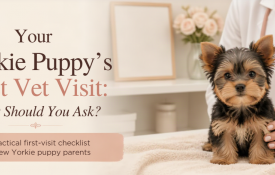
0 Your Yorkie Puppy's First Vet Visit: What Should You Ask?
Your Yorkie Puppy’s First Vet Visit: What Should You Ask? A simple first-appointment checklist for new Yorkie puppy parents FIRST VISIT GOAL: Leave knowing your puppy’s individual vaccine plan, parasite-prevention plan, feeding needs, dental milestones, and exactly who to call after hours. Your puppy’s first veterinary visit is the perfect time to establish a relationship with the medical team that will follow your Yorkie as they grow. Bring any breeder or prior veterinary records, a list of the food and supplements your puppy is receiving, and your questions. 7 Important Questions to Ask 1. What vaccination schedule do you recommend for my puppy? Ask which vaccines are due now and when the next doses should be given. Ask when your veterinarian considers public sidewalks, parks, pet stores, puppy classes, grooming, or other shared dog areas appropriate for your puppy. Vaccination timing and local disease risk vary, so follow your veterinarian’s plan rather than a one-size-fits-all calendar. 2. What parasite prevention does my Yorkie need? Ask about prevention for intestinal parasites, fleas, ticks, and heartworm based on your puppy’s age, weight, lifestyle, and local risk. Ask whether your veterinarian wants a fecal sample or additional parasite testing. 3. When should my puppy be microchipped? Ask when microchipping is appropriate and how registration works. Make sure the chip is registered with your current phone number, email, and address—and update it if you move. 4. When should we discuss spay or neuter timing? Ask your veterinarian to explain the benefits, risks, and timing considerations for your individual Yorkie. Timing can depend on age, size, health, development, and your veterinarian’s clinical judgment. 5. Is my puppy’s dental development on track? Ask the veterinarian to check bite alignment, erupting adult teeth, gum health, and whether any baby teeth appear likely to be retained. Small breeds can be prone to retained baby teeth and early dental disease, so puppyhood is a good time to begin home tooth-brushing practice. 6. Am I feeding the right food and amount? Review the exact food, meal frequency, treats, supplements, and appetite pattern. For a very small Yorkie puppy, ask what changes in appetite, energy, or behavior should trigger a same-day veterinary call. 7. Where should I go in an emergency? Ask which hospital handles after-hours emergencies and whether your regular clinic has an on-call service. Save the emergency hospital’s phone number, address, and driving route in your phone before you need it. Bring This to the Appointment Bring Ask Before You Leave Vaccination / deworming records Next vaccine appointment Current food + feeding schedule Parasite-prevention schedule Medication / supplement list Microchip plan Any recent symptoms or questions Dental follow-up, if needed Stool sample, if clinic requests it Emergency clinic contact information Call the Veterinarian Promptly If Your Puppy Becomes Ill Examples include repeated vomiting or diarrhea, marked weakness, collapse, trouble breathing, seizures, severe pain, inability to keep food or water down, or a very young puppy that suddenly refuses food and seems weak or unusually sleepy. Before You Head Home Ask the veterinary team to write down the next vaccine date, parasite-prevention plan, feeding instructions, and after-hours emergency contact. That one page of notes can become the beginning of your puppy’s lifelong health record. Educational note: This article provides general puppy-care information and is not a substitute for individualized veterinary advice. Your veterinarian should tailor vaccination, parasite prevention, nutrition, and procedure timing to your puppy’s health and local disease risks. Valness Yorkies LLC • ValnessYorkies.com • 301-857-8688
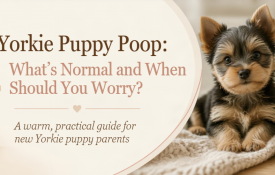
0 Yorkie Puppy Poop: What's Normal and When Should You Worry?
Yorkie Puppy Poop: What's Normal and When Should You Worry? A practical guide to stool changes, diarrhea, parasites, dehydration, and when to call your veterinarian. QUICK ANSWER A healthy puppy stool is usually formed, moist, and easy to pick up. One soft stool can happen after travel, excitement, or a routine change. Repeated watery diarrhea, blood, vomiting, weakness, refusal to eat, or marked sleepiness deserves prompt veterinary attention - especially in a very young or tiny Yorkie. What's Normal After Coming Home? The first few days in a new home can temporarily change stool. Travel, excitement, a different schedule, new treats, and stress may make a bowel movement softer or more frequent. A puppy who is bright, eating, drinking, playful, and quickly returns to formed stools is generally less concerning than a puppy whose diarrhea continues or is paired with other symptoms. A Simple Stool Guide Usually Less Concerning Call Your Veterinarian / Watch Closely Brown, formed, moist, easy to pick up Repeated watery diarrhea or rapidly increasing frequency One mildly soft stool after travel or excitement Bright red blood, black/tarry stool, or large amounts of mucus Temporary change during a carefully managed food transition Diarrhea with vomiting, weakness, pain, or refusal to eat Minor variation in shade after different foods/treats Very pale/gray stool, persistent unusual color, or visible worms Diet Changes: Go Slowly A sudden food change can upset a puppy stomach. Keep your new Yorkie on the food and feeding routine they were already eating at first, unless your veterinarian recommends otherwise. If a food change is needed, ask your veterinarian how gradually to transition. Avoid adding several new treats, toppers, chews, or table foods at once - it becomes difficult to identify what caused the problem. VALNESS PUPPY PARENT TIP For a tiny Yorkie puppy, do not intentionally fast or withhold meals for diarrhea unless your veterinarian specifically tells you to. Small puppies have limited energy reserves and may become weak quickly if they are not eating. Parasites Are Common in Puppies Roundworms, hookworms, Giardia, coccidia, and other intestinal parasites can cause soft stool or diarrhea. Some infected puppies still look energetic, so appearance alone cannot rule parasites out. Follow the deworming and fecal-testing plan recommended by your veterinarian. If diarrhea develops, your clinic may ask for a fresh stool sample. Ask how they want it collected and stored. Do not use leftover dewormers or over-the-counter medications without veterinary guidance; treatment depends on the cause and the puppy's weight. Diarrhea and Dehydration: Why Tiny Yorkies Need Extra Attention Young toy-breed puppies can lose fluid quickly. Repeated diarrhea - especially with vomiting or poor appetite - can become more serious sooner than many owners expect. Possible Dehydration / Illness Signs • Tacky or dry-feeling gums • Unusual weakness or marked sleepiness • Reduced interest in water or food • Reduced urination • Eyes that appear sunken • Collapse or difficulty standing What To Do • Offer access to fresh water unless your veterinarian says otherwise • Keep the puppy warm, quiet, and supervised • Call your veterinarian promptly for repeated diarrhea • Seek urgent care if weakness, collapse, repeated vomiting, or rapid worsening occurs Red Flags: Call the Veterinarian Promptly Repeated watery diarrhea, very frequent stool, or diarrhea that is not improving Blood in the stool, black/tarry stool, or a large amount of mucus Vomiting along with diarrhea Weakness, trembling, collapse, unusual sleepiness, or difficulty standing Refusing food - especially in a very young or very small puppy Painful or swollen abdomen, repeated straining, or crying during bowel movements Suspected ingestion of medication, toxin, string, bone, toy piece, or another foreign object Signs of dehydration or rapid worsening IMPORTANT Do not give human anti-diarrhea medicine, antibiotics, or home remedies unless your veterinarian specifically recommends them for your puppy. Some products can be unsafe, and suppressing symptoms may delay diagnosis of parasites, infection, dietary problems, or a swallowed object. What to Tell Your Veterinarian When the stool change started and how many episodes occurred Stool color and consistency; a photo can be helpful Whether there is blood, mucus, worms, or foreign material Any vomiting, appetite change, weakness, or behavior change Recent food, treat, chew, medication, or supplement changes Possible exposure to other dogs, shared potty areas, standing water, toxins, or swallowed objects The Bottom Line Puppy poop will not look identical every day. A brief soft-stool episode can happen during the transition to a new home. What matters most is the whole puppy: appetite, energy, hydration, frequency of diarrhea, and whether symptoms are improving or getting worse. With a tiny Yorkie puppy, it is reasonable to call your veterinarian sooner rather than later when you are concerned. Educational note: This article provides general puppy-care information and is not a substitute for veterinary diagnosis or treatment. Contact your veterinarian for persistent diarrhea, blood in the stool, vomiting, weakness, dehydration, appetite loss, or other concerning symptoms. Valness Yorkies LLC • ValnessYorkies.com • 301-857-8688
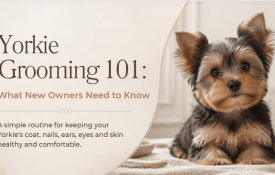
0 Yorkie Grooming 101: What New Owners Need to Know
Yorkie Grooming 101: What New Owners Need to Know A simple routine for keeping your Yorkie clean, comfortable, and confident with grooming. Yorkshire Terriers are known for their beautiful coats, but grooming is about much more than appearance. Regular grooming helps prevent tangles, keeps the face and sanitary areas clean, protects paw and nail comfort, and gives you frequent opportunities to notice changes in the skin, ears, eyes, or coat. The easiest adult Yorkie to groom is often the puppy who learned early that brushing, paw handling, face cleaning, baths, and gentle ear care are normal parts of family life. Keep early sessions short, calm, and positive, and reward cooperation with praise or a tiny treat. VALNESS PUPPY PARENT TIP Practice handling before you need a full grooming session. Touch the paws, lift the ears, stroke the face, and briefly brush the coat while your puppy is relaxed. A few positive minutes can be more useful than a long session that becomes frustrating. Brushing: The Foundation of Yorkie Coat Care Yorkies have a fine, continuously growing coat that can tangle easily, especially as the hair gets longer. Common trouble spots include behind the ears, under the front legs, the chest, belly, legs, and areas where a collar or harness rubs. How often should you brush? A long coat may need daily or near-daily attention, while a shorter companion trim may need less. Coat texture, activity, clothing, and individual tendency to mat all matter, so use the coat in front of you rather than a rigid schedule. Use a small, gentle pin or slicker-style brush appropriate for a toy breed. Work in small sections and support the hair near the skin so you are not pulling. Follow with a metal comb. If the comb catches, there is still a tangle underneath. Use a dog-safe detangling or conditioning spray if needed. Do not yank through mats. Tight mats can pull painfully on the skin. A COAT CAN LOOK BRUSHED ON TOP Finish by gently running a comb through the coat. This is one of the easiest ways to find hidden tangles before they become painful mats. If a mat is tight to the skin, large, or located near delicate areas, ask a professional groomer for help. Cutting a mat with scissors can accidentally cut the skin because loose skin may be pulled up inside the mat. Bathing Your Yorkie Puppy Bath frequency depends on coat length, lifestyle, skin condition, and your veterinarian or groomer’s guidance. Many companion Yorkies are bathed every few weeks or as needed, but there is no single schedule that fits every dog. Brush and comb out tangles before the bath when practical. Use lukewarm water and a mild shampoo made for dogs or puppies. Keep shampoo and direct streams of water out of the eyes and ear canals. Rinse very thoroughly. Shampoo residue can irritate the skin. Towel dry gently and keep your tiny puppy warm until completely dry. If you use a dryer, use a comfortable low or warm setting at a safe distance and avoid overheating. BATH DAY CHECKLIST Brush/comb first • Lukewarm water • Puppy-safe shampoo • Rinse thoroughly • Dry completely • Keep puppy warm • Praise calm behavior Nail Trimming Tiny Yorkie nails still need regular attention. Nails that grow too long can affect comfort, traction, and how the paw contacts the ground. Start with frequent gentle paw handling so nail care does not feel like a surprise. Use small-dog nail clippers or an appropriate nail grinder if your puppy tolerates it. Trim only a small amount at a time and avoid the quick, which contains blood vessels and nerves. Dark nails can make the quick difficult to see, so ask your veterinarian or groomer to demonstrate if you are unsure. Check dewclaws too, if your puppy has them, because they do not wear down normally. HELPFUL TO HAVE ON HAND Styptic powder can help with a minor nail nick. If bleeding is significant, does not stop, or the nail is torn or injured, contact your veterinarian. Ear Care For routine ear care, look and smell before you clean. A healthy ear should not have marked redness, swelling, strong odor, heavy discharge, or obvious pain. Use only a dog ear-cleaning product recommended by your veterinarian when cleaning is needed. Never push cotton swabs deep into the ear canal. Keep bath water out of the ear canals as much as practical and gently dry the outer ear. Do not use medicated ear drops or drying products to treat a suspected infection unless your veterinarian has advised them. Repeated head shaking or scratching, odor, discharge, redness, swelling, pain, or recurring ear problems are reasons to contact your veterinarian. Ear infections, mites, allergies, foreign material, and other problems can look similar but require different treatment. Eye and Face Cleaning Yorkies often need a little help keeping the hair around the eyes and muzzle clean. Gently wipe away normal debris with a soft damp cloth or a pet-safe eye-area wipe, using a clean portion for each eye. Keep facial hair neatly managed so it does not constantly rub the eye. EYE SAFETY Do not put peroxide, harsh stain removers, shampoo, or other irritating products near the eyes. Persistent tearing, squinting, redness, cloudiness, swelling, thick discharge, pawing at the eye, or apparent pain should be evaluated by a veterinarian promptly. Professional Grooming Many Yorkie families use a professional groomer every several weeks, depending on haircut, coat length, and lifestyle. A groomer experienced with toy breeds can help with trims, sanitary care, nails, coat maintenance, and introducing a puppy to grooming equipment in a controlled setting. Before your puppy’s first salon visit, ask your veterinarian when salon exposure is appropriate based on vaccination status and local infectious-disease risk. Tell the groomer about any medical concerns, fear, handling sensitivities, or previous grooming experiences. Ask Your Groomer Why It Matters Do you regularly groom Yorkies or other toy breeds? Tiny dogs need careful handling and appropriately sized equipment. How do you introduce puppies to grooming? Short, positive early visits can build confidence. How do you handle mats? Severe mats should be removed safely, not painfully pulled apart. What is included in the appointment? Ask about nails, ears, sanitary trim, bathing, and haircut. What should I do between visits? Home maintenance prevents tangles and keeps grooming easier. Puppy Coat vs. Adult Coat A Yorkie puppy’s coat changes as the dog matures. Puppies are typically born much darker, and many gradually develop the characteristic blue-and-tan coloring and a more adult coat texture over time. The exact timing, shade, and texture vary with genetics and the individual dog. During coat transition, you may notice changes in texture and an increase in tangling. Grooming needs can shift as the puppy grows, so continue brushing and adjust your routine rather than trying to predict an exact date when the “adult coat” will arrive. FOCUS ON COAT HEALTH, NOT A DEADLINE Color and texture can develop at different rates. A clean, comfortable, mat-free coat matters more than reaching a particular look by a particular age. Long Coat or Puppy Cut? Both can be appropriate for a family Yorkie. A long coat creates the classic flowing Yorkie look but requires substantial brushing, combing, bathing, and maintenance. A shorter puppy cut is often easier for an active household, but “shorter” does not mean “no grooming.” Regular brushing, bathing, face care, and scheduled trims are still needed. Don’t Forget Dental Care Dental care is worth introducing while your Yorkie is young. Start gradually with a dog toothbrush or appropriately sized brush and toothpaste made for dogs - never human toothpaste. Regular brushing, ideally daily when tolerated, can be an important part of preventive care, along with veterinary dental examinations and professional cleaning when recommended. Grooming Safety for a Tiny Yorkie Never leave a puppy unattended on a grooming table, counter, sink, or other elevated surface. Use non-slip footing so your puppy feels secure. Do not use scissors close to a moving puppy unless you are skilled and can work safely. Keep your puppy warm while wet and supervise around dryers, cords, and grooming tools. Avoid human shampoos, essential oils, and other products unless your veterinarian says they are safe for your dog. Stop and reset if your puppy becomes highly distressed. Grooming should build trust, not fear. Get professional help with severe matting rather than risking skin injury at home. A Simple Valness Grooming Routine Use this as general guidance and adjust it for your puppy’s coat, haircut, lifestyle, and veterinary or grooming recommendations. How Often What to Check or Do Daily / regularly Quick coat and face check; gently remove normal eye debris; short handling practice; look for tangles. Several times weekly to daily Brush and comb thoroughly depending on coat length and tendency to tangle. Weekly Check nails, ears, teeth, skin, paw pads, and coat condition. As needed / every few weeks Bath depending on coat, lifestyle, and professional guidance. Every several weeks Professional grooming or trim depending on haircut and coat needs. CALL YOUR VETERINARIAN IF YOU NOTICE Persistent or recurrent ear odor/discharge • A painful, red, or swollen ear • Eye redness, squinting, cloudiness, injury, or significant discharge • Unexplained hair loss, sores, intense itching, rash, or unusual skin odor • A broken/injured nail or bleeding that will not stop • New lumps, skin changes, or anything that appears painful or abnormal Grooming Is Care - and Bonding Grooming does not have to become a wrestling match. Starting young, keeping sessions short, using gentle positive handling, and maintaining a predictable routine can help your Yorkie learn to cooperate. Those quiet grooming moments also give you one-on-one time to notice small changes and strengthen trust. PREPARING FOR YOUR VALNESS YORKIE? Continue the Valness Yorkies New Puppy Parent Guide with “Your Yorkie’s First Week Home,” “What Should I Feed My Yorkie Puppy?”, “How Much Exercise Does a Yorkie Puppy Need?”, “How to Crate Train a Yorkie Without Making the Crate Scary,” and “Yorkie Puppy Hypoglycemia: What Every New Owner Should Know.” Visit ValnessYorkies.com to learn more about our puppies and how they are raised. Educational Disclaimer: This article provides general grooming and puppy-care information and does not replace individualized veterinary advice. Coat, skin, ear, eye, dental, and nail needs vary by puppy. Consult your veterinarian for health concerns and a qualified professional groomer for grooming tasks you are not comfortable performing safely. ValnessYorkies.com • General educational information — consult your veterinarian for health concerns. Valness Yorkies LLC • ValnessYorkies.com • 301-857-8688

0 When Will My Yorkie's Ears Stand Up?
When Will My Yorkie's Ears Stand Up? What new Yorkie owners should know about puppy ear development Normal variation • Teething • Grooming • Ear support • When to call your veterinarian Quick Answer Yorkie puppies do not all follow the same timetable. Many begin developing more upright ear carriage during the early puppy months, but there is no guaranteed week when both ears will stand. One ear may rise before the other, and ears may go up, fall again, and change as the puppy grows. Genetics, ear size and thickness, coat weight, individual development, and the timing of teething can all influence appearance. One of the first things many new Yorkie parents watch is those tiny ears. Maybe both ears looked upright yesterday and one is floppy today. Maybe one is standing while the other is still folded. Maybe a littermate's ears look completely different. Those changes can be a normal part of puppy development. The most important thing to remember is that ear carriage is not a measure of your puppy's worth, personality, affection, or intelligence. Healthy, comfortable ears matter much more than meeting a particular cosmetic timetable. When Do Yorkie Ears Usually Stand? There is no single age that applies to every Yorkshire Terrier puppy. Some puppies show strong, upright ears quite early, while others take longer. It is also common for ears to change from week to week during growth. Both ears may stand at the same time - or one may stand before the other. An ear that was upright may temporarily become softer or flop again. Littermates can develop at different rates. Some Yorkies may keep softer or partially floppy ears as adults. The One-Up, One-Down Stage A puppy with one upright ear and one floppy ear is often simply in a changing stage of development. It can look funny, but by itself it is not usually a medical problem. Take photos and enjoy the stage - it may not last long! A Puppy Ear Journey Can Change Week by Week A puppy may move from soft or floppy ears to one ear lifting, then alternate between up and down before ear carriage becomes more established. This is only an illustration - not a guaranteed timeline. Why Are My Yorkie Puppy's Ears Floppy? Floppy ears can have several explanations, and many are simply part of normal growth. Factors that can affect ear carriage include: Normal developmental variation. Genetics and family traits. The size, shape, thickness, and weight of the ear leather. The amount of hair growing on the upper ear. Individual growth and maturation. Changes that happen during the same months as teething. Less commonly, discomfort, inflammation, injury, or ear disease that changes how a puppy carries an ear. A floppy ear by itself does not automatically mean something is wrong. The puppy's comfort, behavior, and ear health matter more than appearance alone. What Does the Yorkshire Terrier Breed Standard Say? The traditional Yorkshire Terrier show-ring ideal describes small, V-shaped ears carried erect. That describes the breed standard for appearance; it does not mean a companion puppy with softer or floppy ears is less lovable or less valuable as a family dog. Valness Perspective Your puppy's health, temperament, comfort, and relationship with your family matter far more than whether the ears match a show-ring ideal on a particular date. Does Teething Make Yorkie Ears Flop? Owners and breeders often notice changes in ear carriage during the same period that puppies are teething and growing rapidly. The timing can overlap, but there is not a simple rule that teething directly makes the ears fall or that calcium is being 'pulled from the ears.' Because of that, owners should not start calcium, vitamin, or mineral supplements simply to make the ears stand unless a veterinarian has recommended them for a diagnosed nutritional need. Unnecessary supplementation can be harmful. Please Do Not Try to Force the Ears Up Do not give calcium or other supplements solely for ear appearance without veterinary advice. Avoid harsh adhesives, tight wrapping, or methods that irritate skin, restrict circulation, trap moisture, or cause pain. Never repeatedly manipulate an ear that is sore, red, swollen, or sensitive. Can Grooming Help? Yorkie ear hair can become surprisingly heavy. Keeping the hair on the upper part of the ear appropriately trimmed may reduce weight and is often part of routine Yorkie grooming. However, trimming hair does not guarantee that the ears will stand. For first-time owners, having an experienced groomer, breeder, or veterinary professional demonstrate safe ear trimming is a good idea. Puppy ears are small and delicate, and scissors near a moving puppy can cause injury. Related Valness Guide For brushing, bathing, nail care, ear cleaning, face care, and professional grooming, see: Yorkie Grooming 101: What New Owners Need to Know. Should I Tape My Yorkie's Ears? Some breeders and owners use temporary ear-support or taping techniques. Methods vary, and evidence about when they are necessary or how much they change the final result is limited. Taping is a cosmetic/supportive practice - it is not a treatment for ear infection, pain, or disease. If you are considering an ear-support method, do not improvise from random internet videos. Ask your breeder, veterinarian, or another experienced professional to show you a method that protects the skin and ear canal. Never block the ear canal. Never tape tightly enough to affect circulation. Do not trap moisture against the skin. Check the skin often for redness, sores, swelling, or irritation. Stop immediately if the puppy appears painful or distressed. When Should I Call the Veterinarian? A healthy puppy with a floppy ear is very different from a puppy whose ear is painful or inflamed. Contact your veterinarian if you notice: Strong or unusual ear odor. Discharge or excessive debris. Significant redness or swelling. Repeated head shaking or scratching. Pain or sensitivity when the ear is touched. A head tilt or balance problems. A bite, injury, or sudden swelling of the ear flap. A sudden change in ear carriage together with illness, lethargy, or obvious discomfort. Important If an ear suddenly droops after previously being consistently upright and your puppy is also scratching, shaking the head, acting painful, or showing odor or discharge, have the ear checked rather than assuming it is simply normal development. Frequently Asked Questions My Yorkie is coming home and the ears are not standing yet. Should I worry? Usually not based on appearance alone. Ear development varies. Ask your breeder or veterinarian if you have concerns about the puppy's specific ears or health. Can one ear stand before the other? Yes. Uneven development is common, and one ear may be upright while the other remains floppy for a period of time. Should I give calcium to make the ears stand? No, not unless your veterinarian has specifically recommended supplementation for a medical or nutritional reason. Will trimming the ear hair make the ears stand? It may reduce weight on the ear, but it cannot guarantee upright ear carriage. If my Yorkie's ears never stand, is my puppy still a Yorkie? Ear carriage is an appearance trait. It does not determine your dog's personality, value as a companion, or the love and care your puppy deserves. Pedigree and registration are separate matters. Valness Puppy Parent Tip Take a photo of your puppy once a week instead of checking the ears every hour. Puppy development happens gradually, and those pictures can become a wonderful record of how much your Yorkie changes. Those Little Ears Are Part of the Journey Yorkie puppies change rapidly during their first months - their coat, teeth, body shape, confidence, and ears can all look different from one week to the next. There is no need to turn ear development into a daily source of worry. Enjoy the changing stages, watch for signs of healthy ears, and ask for professional guidance when something looks uncomfortable or abnormal. A happy, healthy puppy matters far more than achieving a particular look by a particular date. Watching Your Valness Yorkie Grow? Continue with Yorkie Grooming 101, Your Yorkie's First Week Home, What Should I Feed My Yorkie Puppy?, and Yorkie Puppy Hypoglycemia. Visit ValnessYorkies.com to learn more about our puppies and how they are raised. Educational Disclaimer: This article provides general educational information and is not a substitute for veterinary advice. If your puppy's ear is painful, red, swollen, has discharge or odor, or your puppy has a head tilt, balance problems, or other signs of illness, contact your veterinarian. Valness Yorkies LLC • ValnessYorkies.com • 301-857-8688
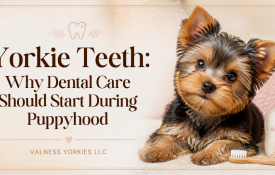
0 Yorkie Teeth: Why Dental Care Should Start During Puppyhood
Yorkie Teeth: Why Dental Care Should Start During Puppyhood A Valness Yorkies guide to brushing, baby teeth, dental chews, small-breed dental health, and veterinary care Quick answer Dental care should begin while your Yorkie is still a puppy. Early, gentle practice makes tooth brushing easier later and gives you a chance to notice retained baby teeth, gum irritation, broken teeth, unusual odor, or other problems before they become more serious. Yorkies are tiny dogs with very small mouths, so there is not much room for crowded teeth, plaque, and tartar. Good dental care is not just about fresh breath - it supports comfort, eating, and long-term oral health. The best time to build those habits is before your puppy decides that a toothbrush is something suspicious. At Valness Yorkies, we encourage new puppy families to make mouth handling and tooth brushing part of the same calm routine as brushing the coat, checking the ears, and trimming nails. A few positive minutes now can make adult dental care much easier. Why Start Dental Care During Puppyhood? Puppyhood is the ideal time to teach a Yorkie that having the lips lifted, mouth touched, and teeth brushed is normal. The goal is not to scrub every tooth perfectly on the first day. The goal is to build trust and create a routine that your puppy will accept throughout life. Puppies usually adapt to new handling more easily when sessions are short and positive. Regular mouth checks help you notice changes as baby teeth are replaced by adult teeth. Starting early prevents dental care from becoming a stressful “new” experience later. Small breeds can develop dental problems at a relatively young age, so prevention matters. Getting Your Yorkie Puppy Accustomed to Tooth Brushing Use a toothbrush or finger brush made for dogs and toothpaste formulated specifically for pets. Do not use human toothpaste; some ingredients are unsafe for dogs, and human toothpaste is not designed to be swallowed by pets. Start with gentle face and muzzle handling. Briefly lift the lips and reward calm behavior. Let your puppy taste a tiny amount of dog toothpaste from your finger so the flavor becomes familiar. Rub a finger gently along the outer surfaces of a few teeth and gums for only a few seconds. Introduce the toothbrush slowly. Brush just a few teeth at first, using gentle circular motions near the gumline. Gradually increase the number of teeth you brush as your puppy becomes comfortable. Keep the session upbeat and end before your puppy becomes frustrated. Valness Puppy Parent Tip Consistency matters more than perfection. A 30-second positive session that happens regularly is more useful than a long wrestling match that teaches your puppy to fear dental care. How Often Should I Brush My Yorkie’s Teeth? Daily brushing provides the most consistent plaque control when your puppy tolerates it. If daily brushing is not yet realistic, work toward it gradually. Your veterinarian can recommend a home-care routine based on your Yorkie’s age, mouth, and individual dental health. Retained Baby Teeth: A Common Concern in Toy Breeds Puppies are born without visible teeth, develop deciduous (baby) teeth, and then replace them with permanent adult teeth. In some toy-breed puppies, a baby tooth does not fall out when the adult tooth comes in. This is called a retained deciduous tooth. Retained baby teeth are especially important to watch in the canine teeth - the long pointed teeth - although any baby tooth can be retained. When two teeth occupy the space meant for one, food and plaque can become trapped, teeth can crowd, and the bite may be affected. What to look for If you notice what appears to be “two teeth in one spot,” an adult tooth erupting beside a baby tooth, a tooth that remains after the adult tooth is clearly present, or unusual crowding, ask your veterinarian to examine your puppy’s mouth. Do not try to pull a retained baby tooth at home. Your veterinarian will decide whether a retained tooth should be monitored or removed and when treatment is appropriate. Decisions depend on the tooth involved, the puppy’s age, the position of the adult tooth, and the overall bite. What Is Normal During Teething? During teething, puppies may chew more, have mildly tender gums, or lose tiny baby teeth that you never find because they are swallowed harmlessly while eating or playing. Mild blood spotting on a toy can sometimes occur as a loose baby tooth falls out. However, persistent bleeding, significant swelling, broken teeth, severe pain, inability to eat, or a foul odor deserves veterinary attention. Dental Chews: Helpful, but Not a Replacement for Brushing Dental chews can be a useful addition to a dental-care plan, but they should not replace tooth brushing or veterinary dental care. Choose products that are appropriate for your puppy’s age and very small size, and supervise chewing. Ask your veterinarian which dental products are appropriate for your puppy’s age and size. Look for products designed specifically for dogs; products carrying the Veterinary Oral Health Council (VOHC) Accepted seal have met defined standards for plaque or tartar control. Use a chew large enough that your puppy cannot swallow it whole or break off a dangerous chunk. Count chew calories as part of the daily diet, especially for a tiny puppy. Discard chews that become small enough to swallow or develop sharp edges. Avoid extremely hard chews Very hard objects can crack teeth. Antlers, hard bones, rocks, very hard nylon-style objects, and other items that do not flex at all may increase the risk of a fractured tooth. Ask your veterinarian for safer chew options for your individual puppy. Why Dental Disease Can Be a Bigger Issue for Small Breeds Small dogs have the same basic number of adult teeth as larger dogs, but those teeth must fit into a much smaller mouth. Crowding and close spacing can make plaque control more challenging. Yorkies may therefore benefit from especially consistent home care and regular veterinary dental examinations. Plaque is a soft bacterial film that forms on teeth. If it is not removed, it can harden into tartar (calculus). Inflammation around the gums and supporting tissues can progress to periodontal disease. Once tartar is firmly attached beneath or along the gumline, home brushing cannot simply remove it; professional veterinary dental treatment may be needed. When Should I Involve the Veterinarian? Your veterinarian should look at your puppy’s mouth during routine puppy examinations. Dental development, retained baby teeth, bite alignment, gum health, and tooth injuries are all things that can be checked while your puppy is growing. What you notice Why it matters Strong or worsening bad breath Can accompany plaque, gum inflammation, infection, retained teeth, or another oral problem. Red, swollen, or bleeding gums May indicate gingivitis, injury, or another dental concern. Two teeth in the same position May be a retained baby tooth beside an erupting adult tooth. Broken, discolored, or loose adult tooth Needs veterinary assessment; damaged teeth can be painful even when a puppy still eats. Dropping food, chewing on one side, or refusing hard food Can be a sign of mouth pain. Pawing at the mouth, facial swelling, or obvious pain Should be evaluated promptly. Persistent mouth bleeding or significant injury Seek veterinary care promptly; severe bleeding or trauma can be urgent. What About Professional Dental Cleanings? Home care slows plaque and tartar buildup, but it does not replace veterinary dental examinations. If your veterinarian identifies periodontal disease or significant tartar, they may recommend a professional dental cleaning. A proper veterinary dental procedure typically includes an oral examination and cleaning above and below the gumline under anesthesia, with dental X-rays or other treatment when indicated. The timing of a first professional cleaning is not the same for every Yorkie. Your veterinarian will base recommendations on what they see in your dog’s mouth rather than on age alone. A Simple Yorkie Dental-Care Routine Daily or as close to daily as practical Brush with dog toothpaste once your puppy is comfortable. Briefly look at gums and teeth. Several times each week Practice lip lifting and mouth handling if your puppy is still learning. As recommended Offer veterinarian-approved dental chews or dental products appropriate for a tiny dog. During teething Watch for crowded teeth or an adult tooth erupting beside a retained baby tooth. Routine vet visits Ask the veterinarian to check dental development, retained teeth, bite, gums, and overall oral health. When should I start brushing my Yorkie puppy’s teeth? You can begin gentle mouth handling as soon as your puppy settles into your home. Introduce dog toothpaste and a small toothbrush gradually. The earlier the experience becomes routine and positive, the easier it usually is to maintain. Is puppy breath supposed to smell bad? A mild puppy-mouth odor can vary, but persistent or strong bad breath is worth discussing with your veterinarian, especially if you also see red gums, retained teeth, pain, or appetite changes. Can dental chews replace brushing? No. Dental chews can supplement home care, but brushing remains one of the most direct ways to disrupt plaque on the tooth surface. Should I pull a loose baby tooth? No. Let normal baby teeth fall out on their own. If a baby tooth appears retained beside an adult tooth or looks abnormal, have your veterinarian examine it. Do Yorkies need professional dental cleanings? Some do, and the timing varies. Your veterinarian can tell you when professional cleaning is appropriate based on tartar, gum health, crowding, and periodontal findings. A Healthy Mouth Starts With Small Habits Dental care does not have to be complicated. Start with a few seconds of calm handling, introduce brushing gradually, pay attention during teething, and ask your veterinarian to check your Yorkie’s teeth as your puppy grows. Those small habits can help protect comfort and oral health for years to come. Preparing for Your Valness Yorkie? Continue the Valness Yorkies New Puppy Parent Guide with “Yorkie Grooming 101,” “What Should I Feed My Yorkie Puppy?”, “Yorkie Puppy Hypoglycemia: What Every New Owner Should Know,” and “How Much Exercise Does a Yorkie Puppy Need?” Visit ValnessYorkies.com to learn more about our puppies and how they are raised. Important: This article provides general educational information and is not a substitute for an examination or individualized advice from your veterinarian. Contact your veterinarian for retained baby teeth, mouth pain, broken teeth, facial swelling, persistent bleeding, difficulty eating, or any dental concern.
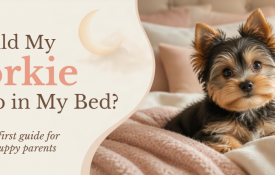
0 Should My Yorkie Sleep in My Bed?
Should My Yorkie Sleep in My Bed? A safety-first guide for Yorkie puppy parents Yorkies are affectionate companion dogs, and many love sleeping close to their people. That closeness can be comforting for both of you, especially during the first weeks at home. An adult Yorkie may safely share the bed in some homes. A very young or tiny Yorkie puppy, however, has different safety needs: adult beds are high, soft, full of bedding, and designed for people rather than fragile little puppies. QUICK ANSWER A very young or tiny Yorkie puppy is usually safest in a secure crate, puppy-safe enclosure, or separate bed near the owner rather than loose in an adult bed. Bed-sharing may become reasonable later depending on physical maturity, house-training, health, behavior, bed height, other sleepers, and whether unsafe jumping can be prevented. There is no universal age. 1. Why Yorkies Love Sleeping Close to Their People? For a Yorkie, sleeping near you can offer warmth, familiar scent, routine, and companionship. A puppy may settle more easily when your voice and presence are nearby, while an adult dog may simply enjoy the comfort of being part of the household rhythm. Wanting closeness is not the same as being ready for safe bed-sharing. A tiny puppy can adore you and still lack the balance, body awareness, bladder control, and judgment needed around an adult bed. Bonding — closeness can strengthen trust when the puppy is handled gently and given choices. Warmth — your presence may help a puppy feel secure, but warmth should never come from heavy bedding or an unsafe sleeping position. Routine — a predictable bedtime helps puppies learn when it is time to settle. Companionship — your puppy can feel included while still sleeping in a secure space beside you. 2. The Biggest Risk: Falls and Jumps To a tiny Yorkie puppy, an adult bed can be a significant height. A curious puppy may wake, hear a sound, notice a person moving, or feel the urge to potty and try to jump down before anyone can intervene. TINY PUPPY, BIG FALL Prevention is safer than hoping a puppy learns not to jump. Block access when you cannot supervise, lift your puppy carefully, and do not encourage repeated jumping on or off the bed. Even one awkward landing can cause pain or injury. A puppy may also become frightened and repeat the jump because the movement happened faster than a person could respond. If your puppy falls or seems painful, unusually quiet, weak, unsteady, or reluctant to move, contact a veterinarian promptly. 3. Other Bed-Sharing Risks for a Young Puppy Falls are not the only concern. A very small puppy may be at risk of: Being rolled onto or pinned by an adult or another sleeper. Becoming trapped under heavy bedding where breathing, movement, or supervision is limited. Falling into gaps between the mattress, wall, headboard, or nearby furniture. Jumping suddenly after a noise, dream, movement, or nighttime potty urge. Chewing bedside items such as cords, tissues, pills, or small objects. Having nighttime accidents before reliable overnight house-training is established. Interrupted puppy sleep when human movement, light, or bedding keeps waking a developing puppy. These risks do not mean bed-sharing is always wrong. They do mean that a tiny puppy needs a setup designed around puppy safety rather than adult convenience. 4. A Safer First-Night Setup For a new puppy, place a secure crate or puppy-safe sleep area beside your bed. This provides closeness without giving a tiny puppy access to the mattress edge, loose bedding, or bedside hazards. Take a calm potty trip before bed. Use a safe, appropriately sized sleeping surface that is free from loose hazards. Keep nighttime potty trips quiet, brief, and low-stimulation. Move cords, medications, tissues, and small objects out of reach. Follow veterinary and breeder feeding instructions for very small puppies, including any guidance about overnight meals. The goal is not isolation. It is a predictable sleep routine in which your puppy can hear and smell you while resting in a protected space. 5. Valness Puppy Parent Tip Even if you eventually want bed-sharing, teaching independent crate or dog-bed sleep is valuable. Your Yorkie may need that skill for travel, boarding, recovery after an injury or procedure, illness, household changes, or an unexpected emergency. VALUABLE LIFE SKILL A puppy who can relax in a safe sleep space has more options. Practice independence positively, then enjoy supervised cuddles when your puppy is awake and secure. 6. Does Sleeping in a Crate Mean My Puppy Is Lonely? No. A positively introduced crate can become a familiar, comfortable sleeping place, not a punishment. Add calm routines, gentle praise, and appropriate comfort while your puppy learns that the crate predicts rest and safety. Some brief protest can happen during a new routine, but escalating or severe distress deserves attention. For persistent distress, speak with a veterinarian or a qualified reward-based trainer who can help you adjust the plan without forcing fear or panic. 7. When Might Bed-Sharing Become More Reasonable? There is no universal age or weight that makes bed-sharing safe for every Yorkie. Consider the whole picture: Physical maturity — the puppy is no longer extremely fragile. Overnight house-training — accidents are no longer an expected part of the routine. Calm settling — the dog can rest without wandering, chewing, or repeatedly trying to jump down. Health and orthopedic status — no concern makes a fall or awkward landing riskier. Fall prevention — unsafe jumping down can be prevented rather than merely discouraged. Room for everyone — heavy sleepers and large pets will not crowd or pin the Yorkie. A safe alternative — a separate sleep space remains available whenever circumstances change. 8. A Bedtime Safety Checklist Before Bed Bedroom Safety Potty before bedtime Calm wind-down Confirm puppy ate as expected Normal sleep routine Know how puppy will get down safely No mattress gaps No accessible cords, pills, tissues, or small objects No unsupervised stair or high-furniture access No heavy bedding the puppy can disappear beneath Consider other sleepers and pets 9. What About Bed Rails, Pet Stairs, and Ramps? Bed rails, pet stairs, and ramps may help in some homes, but they are not complete safety solutions. A ramp or stair system must be stable, non-slip, appropriately sized, and supervised while your Yorkie learns to use it. Even with access equipment, a puppy may jump from another part of the bed, climb around the barrier, or use the structure when sleepy and unsteady. Continue to block access when you cannot supervise, and reassess the setup as your dog grows or the room changes. 10. Should Children Sleep With a Yorkie Puppy? For very small puppies, an adult-supervised separate sleep area is generally safer than sharing a child’s bed. Children may move unpredictably during sleep, and a tiny puppy may disappear beneath bedding or be difficult to notice in the dark. Children can still build a beautiful bond through supervised cuddles, gentle handling, quiet story time, and helping with a calm bedtime routine. An adult should manage the puppy’s sleep space and lifting needs. 11. What If My Yorkie Already Sleeps in My Bed? An adult dog’s routine can continue if the arrangement remains safe and restful for everyone. Still, reassess the setup when your Yorkie ages or experiences arthritis, injury, vision changes, medication effects, illness, or a change in balance or mobility. An older or unwell dog may need a lower, more stable sleeping surface, easier access to water and potty areas, or a separate bed that reduces the chance of a painful jump. A familiar routine can be preserved while the physical setup changes. 12. When to Choose a Separate Sleep Space A separate sleep space is the safer choice when: The puppy is very young, tiny, newly home, or not house-trained. The bed is high or has accessible gaps at the edge. The puppy jumps, wanders, chews, or cannot settle safely overnight. Sleepers are heavy or restless, or another pet could crowd the puppy. The puppy is ill, injured, recovering from surgery, or taking medication that affects awareness or movement. A veterinarian recommends restricted activity or a controlled sleep environment. Your family sleeps better separately. Restful sleep supports patient, attentive puppy care. Choosing a separate space is not a rejection of your Yorkie. It is a practical way to protect a small body while giving the whole household a dependable nighttime routine. 13. Frequently Asked Questions Will my Yorkie love me less if not allowed in bed? No. Your Yorkie can feel deeply bonded through daily care, play, training, supervised cuddles, and a secure sleep space nearby. Love is not measured by mattress access. Will bed-sharing cause separation anxiety? Not automatically. Bed-sharing itself does not determine whether separation anxiety develops. Still teach independent settling, short calm separations, and comfortable rest in a crate or dog bed. Are pillows around the edge safe? No. Pillows are not reliable fall protection and can add trapping hazards, especially for a tiny puppy who can burrow beneath or between them. Is a low bed safer? It can reduce fall height, but it does not remove all bed-sharing risks. Gaps, bedding, jumping, pinning, chewing, accidents, and interrupted sleep still need to be considered. When is my Yorkie old enough? There is no single age. Assess physical maturity, house-training, health, behavior, bed height, other sleepers, and the overall environment together. The Best Sleep Arrangement Is the One That Keeps Your Yorkie Safe. Cuddles are fine, but sleeping privileges should match your Yorkie’s size, maturity, behavior, and environment. A tiny puppy may be happiest close to you without being loose in an adult bed. For a very young puppy, a secure crate, puppy-safe enclosure, or separate bed beside the owner can provide warmth and reassurance while avoiding adult-bed risks. As your Yorkie grows, reassess calmly rather than relying on a universal age or weight rule. Preparing for Your Valness Yorkie? Find thoughtful puppy-parent resources at ValnessYorkies.com from Valness Yorkies LLC. Explore these related resources: Your Yorkie’s First Week Home How to Crate Train a Yorkie Without Making the Crate Scary How Much Exercise Does a Yorkie Puppy Need? Yorkie Puppy Hypoglycemia: What Every New Owner Should Know EDUCATIONAL DISCLAIMER General puppy-care and safety information only, not individualized veterinary advice. Very small puppies and dogs with medical, orthopedic, neurologic, respiratory, or other health concerns may need special sleeping arrangements; ask a veterinarian what is appropriate for the puppy.

0 Puppy-Proofing Your Home for a Tiny Yorkie
Puppy-Proofing Your Home for a Tiny Yorkie A room-by-room safety guide for protecting a very small puppy from everyday household hazards. THE BIG IDEA A Yorkie puppy can fit into places, reach hazards, and fall from heights that would not worry you with a larger dog. Puppy-proof at floor level, control access with gates and closed doors, supervise closely, and assume your puppy will investigate anything within reach. Bringing home a tiny Yorkie is exciting, but their size changes the way you need to look at your home. A cord behind a table, a recliner mechanism, a dropped pill, an open stairway, or a quick jump from the sofa can become a serious hazard. The goal is not to make your home sterile—it is to create safe zones where your puppy can explore without getting hurt. Start With These 9 High-Priority Hazards 1. Electrical cords Unplug or block access to cords when possible. Use cord covers, route cables behind furniture, and keep chargers out of reach. A puppy that chews a live cord can suffer burns or electrical injury. 2. Recliners & rocking furniture Always know where your puppy is before opening or closing a recliner, rocking chair, sofa bed, or powered footrest. Tiny puppies can crawl underneath or beside moving parts. 3. Stairs Use secure baby gates at the top and bottom of stairs. Carry very young puppies when needed and avoid unsupervised stair access until they are physically mature and coordinated. 4. Open doors A Yorkie can slip through an open door in seconds. Use a “puppy check” before opening exterior doors and consider a second barrier such as a gate or pen near busy entryways. 5. Small objects Pick up coins, jewelry, children’s toys, hair ties, rubber bands, batteries, sewing items, earbuds, pieces of plastic, and anything small enough to swallow or choke on. 6. Medications Keep prescriptions, vitamins, supplements, creams, nicotine products, cannabis products, and pill organizers completely inaccessible. Never leave a dropped pill on the floor. 7. Toxic foods & plants Keep potentially toxic foods and unknown plants out of reach. Common food hazards include chocolate, grapes/raisins, xylitol-containing products, onions/garlic, alcohol, caffeine, and macadamia nuts. When in doubt, ask your veterinarian before allowing access. 8. Larger dogs Even friendly large dogs can injure a tiny puppy accidentally. Use slow, supervised introductions, give the puppy an escape-safe area, and separate during high-energy play, feeding, or when supervision is not possible. 9. Jumping from furniture Do not encourage a tiny puppy to jump from beds, sofas, laps, or other raised surfaces. Lift carefully, block access when unsupervised, and remember that pet stairs or ramps reduce—but do not eliminate—fall risk. TINY PUPPY RULE: GET DOWN TO THEIR LEVEL Before your puppy arrives, sit or kneel on the floor and scan every room from puppy height. If you can see a cord, gap, small object, dangling fabric, open vent, or reachable trash, your Yorkie probably can too. A Room-by-Room Puppy-Proofing Walkthrough Living Room Block recliners and furniture mechanisms when you cannot see the puppy. Remove dangling cords, remotes, batteries, small décor, candles, and breakables. Prevent unsupervised sofa and chair access. Kitchen & Dining Area Use gates during cooking. Keep trash secured, food off low tables, cleaning products locked away, and dropped ingredients picked up immediately. Check under the table after meals. Bedroom Keep medications, jewelry, hair accessories, tissues, charging cords, and laundry off the floor. Block dangerous gaps behind furniture. Do not leave a tiny puppy unsupervised on the bed. Bathroom Close toilet lids, secure cleaners and medications, remove razors and dental floss, and keep trash covered. Watch for dropped pills and small cosmetic items. Laundry & Utility Areas Keep detergents, dryer sheets, pods, chemicals, cords, and tools inaccessible. Always check washers and dryers before closing or starting them, especially in homes where pets can enter the area. Garage, Porch & Yard Store antifreeze, fertilizers, pesticides, fuels, sharp tools, rodent products, and chemicals securely. Check fences and gates for gaps a tiny Yorkie can squeeze through, and supervise outdoor time. Open Doors, Visitors & Busy Households The most dangerous moment may be when someone is entering or leaving. A puppy that is curious, excited, or following a person can dart toward an open door before anyone notices. During deliveries, parties, school drop-off, or busy family moments, place your puppy behind a secure gate, in a pen, or in a crate before the door starts opening repeatedly. Living Safely With Larger Dogs Size differences matter even when both dogs are friendly. A large dog can knock over, step on, body-slam, or grab a toy from a Yorkie puppy without intending harm. Keep early interactions calm, short, and supervised. Separate dogs for meals and high-value chews, interrupt escalating play, and provide a puppy-only retreat that the larger dog cannot enter. Why Jumping From Furniture Deserves Special Attention Tiny puppies have short legs, light bodies, and developing coordination. A jump from a bed or sofa may be a much bigger drop relative to their body size than it looks to us. Prevent access instead of relying on training alone. If you use pet stairs or a ramp later, choose a stable, non-slip design and still supervise until your dog uses it reliably. Create One “Yes Space” A puppy-safe “yes space” gives your Yorkie a place where nearly everything is allowed and the environment—not constant correction—does the safety work. This might be a gated room, exercise pen, or crate-and-pen setup near the family. Include Keep Out Safe bed or crate Cords and chargers Fresh water in a stable bowl Loose medication or vitamins Age-appropriate toys Tiny objects and children’s pieces Non-slip flooring Recliner or furniture mechanisms Easy-to-clean potty plan Toxic foods, plants, cleaners Calm supervision Unsupervised access to stairs/furniture The 60-Second Daily Puppy Safety Check ☐ Floor clear of pills, food, small toys, hair ties and trash ☐ Electrical cords and chargers inaccessible ☐ Recliners/chairs checked before moving ☐ Stair gates latched ☐ Exterior doors and gates secure ☐ No unsupervised access to beds, sofas or high furniture ☐ Toxic foods, plants and cleaners inaccessible ☐ Interactions with larger pets supervised ☐ Puppy-safe area stocked and ready When to Call a Veterinarian Right Away Contact your veterinarian or an emergency veterinary clinic promptly if your puppy may have swallowed medication, a toxic food or plant, a battery, sharp object, string-like material, or another unknown substance; chewed a live electrical cord; was caught in furniture; fell from a height; or was injured by another animal. Seek urgent care for collapse, trouble breathing, repeated vomiting, seizures, severe pain, uncontrolled bleeding, inability to stand, or sudden marked weakness. DO NOT WAIT FOR SYMPTOMS AFTER A POSSIBLE POISONING Some toxins cause delayed signs. If you know or strongly suspect your puppy swallowed a medication, chemical, toxic food, or plant, contact a veterinarian or animal poison resource for instructions rather than trying a home remedy or inducing vomiting unless a veterinary professional specifically tells you to do so. Frequently Asked Questions When can I stop puppy-proofing? Puppy-proofing changes as your Yorkie matures, but many hazards remain for life. Adult dogs can still swallow pills, chew dangerous items, slip through doors, or fall from furniture. Are pet stairs enough to make furniture safe? No. They may reduce jumping when used correctly, but a dog can still jump from another edge. Supervision and access control remain important. My larger dog is gentle. Do I still need to supervise? Yes, especially during the puppy’s early weeks. Accidental injuries can happen during normal play because of the size difference. Can I use baby gates? Yes, if the gate is secure and the spacing cannot trap or allow a tiny puppy through. Avoid setups the puppy can climb, squeeze through, or knock over. What if I am not sure whether a food or plant is toxic? Keep it out of reach and ask your veterinarian or a reputable animal poison resource before allowing access. A Safe Home Lets a Tiny Yorkie Be Curious Puppy-proofing is not about preventing every adventure. It is about removing the hazards your puppy is too young to understand. A few gates, closed doors, cord covers, safe storage habits, and consistent supervision can give your Yorkie the freedom to explore while you protect that tiny body from very grown-up household risks. Before Pickup Day: A 10-Minute Final Sweep ☐ Walk every room at puppy height one more time. ☐ Test gates, pens and exterior latches for gaps or loose fittings. ☐ Put remotes, chargers, medications, vitamins and small objects away. ☐ Decide where the puppy will be during cooking, deliveries and busy door traffic. ☐ Make sure every family member knows the recliner and open-door rules. ☐ Choose a safe sleeping area and block unsupervised furniture access. ☐ Save your regular veterinarian and nearest emergency veterinary clinic in your phone. Keep a Simple Puppy Safety Kit Nearby Keep a secure carrier, clean towel, flashlight, leash/harness, your puppy’s health information, and veterinary contact numbers where the family can find them quickly. Avoid keeping home “antidotes” or inducing vomiting unless a veterinary professional specifically directs you to do so. PREPARING FOR YOUR VALNESS YORKIE? Continue the Valness Yorkies New Puppy Parent Guide: Your Yorkie’s First Week Home • How to Crate Train a Yorkie Without Making the Crate Scary • How Much Exercise Does a Yorkie Puppy Need? • Yorkie Puppy Hypoglycemia: What Every New Owner Should Know ValnessYorkies.com • Valness Yorkies LLC • 301-857-8688 Educational disclaimer: This article provides general puppy-safety information and is not a substitute for individualized veterinary advice. If your puppy is injured or may have swallowed a medication, toxin, foreign object, or other potentially dangerous substance, contact a veterinarian or emergency veterinary service promptly. Valness Yorkies LLC | ValnessYorkies.com

0 When Can My Yorkie Puppy Meet Other Dogs?
When Can My Yorkie PuppyMeet Other Dogs? How to balance early socialization with vaccination status, disease exposure, and safe introductions QUICK ANSWER Socialization should begin early, but it does not have to mean taking a young puppy everywhere. Before the vaccine series is complete, choose controlled, low-risk experiences: healthy vaccinated dogs you know, carefully managed visitors, clean private spaces, and well-run puppy classes that follow veterinary vaccine and sanitation requirements. Ask your veterinarian when your puppy can safely use public dog areas because local risks for parvovirus, leptospirosis, canine influenza and other infections vary by community. Yorkie puppies have an important job during early puppyhood: learning that people, dogs, sounds, surfaces and everyday life are safe. At the same time, their immune protection is still developing. The goal is not to choose between socialization and disease prevention - it is to do both thoughtfully. Socialization Is More Than Meeting Dogs Good socialization means helping a puppy build positive, age-appropriate experiences without overwhelming them. Dog-to-dog play is only one part of it. A Yorkie puppy can also learn through calm exposure to: Different people, voices, hats, coats and mobility aids Household sounds, grooming tools and gentle handling Car rides, carriers, new surfaces and safe outdoor sights Calm, vaccinated dogs with known health histories Short positive training sessions and quiet observation from a safe distance VALNESS PUPPY PARENT TIP A puppy can be socialized without walking on high-traffic public ground. Carrying your Yorkie, using a clean stroller or carrier, visiting a private yard, or watching the world from a safe location can provide valuable exposure while reducing unnecessary contact with contaminated surfaces. Why Vaccination Status Matters Young puppies receive a series of core vaccines because maternal antibodies can interfere with early doses and protection develops over time. Your veterinarian will determine the schedule that fits your puppy, medical history and local disease risk. Many puppies receive their final initial core-vaccine dose at about 16 weeks of age, but some need later vaccination based on individual circumstances or local risk. Until your veterinarian says public ground is appropriate, be especially cautious with places where many unknown dogs eliminate or walk. Parvovirus, for example, can persist in the environment and may be carried on contaminated shoes, soil and surfaces. Usually Lower Risk Usually Higher Risk Before Vet Clearance Your own clean home and private yard Dog parks and communal dog runs Healthy, vaccinated dogs you know Pet-store floors and busy pet relief areas Carefully screened puppy class Shared apartment potty areas used by many dogs Being carried in public Unknown dogs with uncertain vaccine or health status Visitors in your home Areas with recent vomiting, diarrhea or known disease outbreaks Can My Puppy Meet a Friend or Family Member's Dog? Often, yes - if the meeting is carefully controlled and your veterinarian has not advised otherwise. Choose an adult dog that is healthy, appropriately vaccinated, gentle with puppies and comfortable around small dogs. Meet in a clean private area rather than a public dog park. Start with one calm dog, not a group. Keep the first meeting short and closely supervised. Allow both dogs space to move away; do not force nose-to-nose contact. Interrupt rough play, body slamming, relentless chasing or pinning. Separate food, chews and high-value toys at first. Because Yorkies are tiny, supervise size-mismatched play even when the larger dog is friendly. WATCH YOUR PUPPY, NOT THE CLOCK A good introduction may last only a few minutes. End while the puppy is still comfortable. Hiding, freezing, repeated escape attempts, tucked posture, frantic behavior or inability to disengage are signs the interaction needs more distance or a break. What About Puppy Classes? A well-run puppy class can offer valuable training and social learning before the vaccine series is fully complete, but the program should have sensible health safeguards. Ask your veterinarian whether a class is appropriate for your puppy and ask the training facility about its policies. Ask the Class What You Want to Hear What vaccines are required? Requirements are age-appropriate and consistent with veterinary guidance. How is the floor cleaned? The facility uses a clear sanitation protocol and cleans accidents promptly. Are sick puppies excluded? Yes - coughing, vomiting, diarrhea or contagious illness means staying home. How large are groups? Small enough for safe supervision and controlled play. How is play managed? Puppies are matched thoughtfully; shy or tiny puppies are not overwhelmed. What training methods are used? Reward-based methods that avoid fear, force and intimidation. GOOD PUPPY CLASS DOES NOT MEAN FREE-FOR-ALL PLAY The best classes teach puppies to focus around other dogs, settle, respond to their owners and enjoy brief appropriate interactions. Constant wrestling is not the goal. Visitors Are Socialization Too Inviting calm people into your home can give a young Yorkie valuable social experience without exposing them to a high-traffic public dog area. Keep visits short and positive, and let the puppy approach rather than being passed from person to person. Ask visitors not to bring sick dogs. Have visitors wash hands if they have just handled other animals. If local parvovirus risk is high, ask your veterinarian whether shoes should remain at the door. Supervise children closely and teach them to sit, use gentle hands and allow the puppy to move away. Give your puppy quiet rest after visitors; overtired puppies often become bitey, frantic or unable to settle. A Safer Introduction: Step by Step Step What It Looks Like 1. Choose the right dog Healthy, vaccinated, calm, socially appropriate and comfortable with small dogs. 2. Choose the right place A clean private home or yard, or another location approved by your veterinarian. 3. Start with space Let the dogs notice each other without being pushed into face-to-face contact. 4. Reward calm behavior Praise and reward checking in, sniffing politely, disengaging and relaxed body language. 5. Keep it short A few good minutes are better than continuing until one puppy is tired or overwhelmed. 6. Separate before problems Use gates, pens, crates or leashes as management tools, not punishment. Dog Parks: Usually Not the First Step Dog parks can expose a puppy to unknown dogs, uncontrolled play, shared water and contaminated ground. Even after vaccination, a dog park may be too intense for a tiny or inexperienced Yorkie. Calm one-on-one play dates and structured classes are often easier places to build good social skills first. Socialization Without Ground Exposure If your veterinarian wants your puppy off public ground for now, you can still create a rich socialization plan. Keep every experience short and positive: Carry the puppy outside to watch people, traffic and bicycles from a safe distance. Use a clean carrier or stroller for brief outings. Invite different calm visitors into your home. Practice gentle brushing, paw handling, ear checks and looking in the mouth. Play recordings of household and community sounds at low volume. Introduce safe surfaces at home: carpet, tile, grass in a private yard, rubber mat and a low stable platform. Arrange meetings with one known healthy vaccinated dog at a time. DO NOT WAIT FOR "FULL VACCINATION" TO TEACH YOUR PUPPY ABOUT LIFE Early social development matters. The safer approach is controlled exposure - not isolation and not unrestricted public contact. Your veterinarian can help you decide which experiences are appropriate where you live. How Local Disease Risk Changes the Answer There is no single nationwide rule for the exact day every Yorkie puppy can safely walk everywhere. Risk can change with geography, season, local outbreaks, wildlife exposure, housing type and the number of dogs using shared spaces. Your veterinarian is the best source for local guidance. Ask specifically about: Parvovirus activity in your community Leptospirosis risk from wildlife, standing water and local environment Canine influenza or respiratory outbreaks Bordetella recommendations for classes, grooming or boarding When your puppy may safely use sidewalks, parks, pet stores and shared potty areas A Simple Socialization Plan for a Young Yorkie Experience Safer Early-Puppy Version Meet people One or two calm visitors at home; let puppy approach. See other dogs Known healthy vaccinated dog, supervised one-on-one. Go outside Carry puppy or use clean carrier/stroller until vet clears public ground. Learn around dogs Well-run puppy class with health and sanitation policies. Explore surfaces Clean private home/yard and controlled surfaces. Practice calmness Reward resting, looking and disengaging - not just play. Signs an Introduction Is Going Well Loose, wiggly body language Curious sniffing with easy disengagement Play bows and balanced turn-taking Puppy checks back in with you Dog can pause and settle after play Both dogs choose to re-engage rather than being forced Stop or Create More Distance If You See Repeated hiding or escape attempts Freezing, cowering or tucked posture Relentless chasing or pinning A large dog repeatedly body-slamming the puppy Guarding of food, toys or people Escalating barking, snapping or inability to calm down Any sign of illness such as coughing, vomiting, diarrhea, nasal discharge or unusual lethargy WHEN TO CALL YOUR VETERINARIAN Contact your veterinarian promptly if your puppy has been exposed to a dog known or suspected to have a contagious illness, or if your puppy develops vomiting, diarrhea, coughing, nasal discharge, fever, marked lethargy, loss of appetite or other concerning signs. Very young and tiny puppies can become dehydrated or weak quickly. Frequently Asked Questions Can my puppy meet dogs before all vaccinations are finished? Often yes, in carefully controlled situations with known healthy vaccinated dogs and veterinarian guidance. Avoid high-risk public areas until your veterinarian clears them. Can friends bring their dogs to my house? Potentially, if those dogs are healthy, vaccinated, good with puppies and your veterinarian has not advised otherwise. One calm dog at a time is easier to manage. Is a puppy class safe before the vaccine series is complete? Many veterinarians support carefully managed puppy classes with vaccine requirements and strong sanitation. Ask your veterinarian and the facility about their policies. When can my puppy go to a dog park? Dog parks are usually not an ideal first socialization setting. Wait for veterinary clearance for disease exposure and consider whether your tiny Yorkie is behaviorally ready for uncontrolled groups. What if my puppy seems afraid of another dog? Increase distance, stop forcing interaction and reward calm observation. Fear is not something a puppy should be pushed through. The Goal: Safe Exposure, Not Maximum Exposure A well-socialized Yorkie is not a puppy who has met the greatest number of dogs. It is a puppy who has learned that new experiences can be calm, safe and manageable. Thoughtful socialization protects emotional development while sensible disease precautions protect physical health. Your veterinarian can help you decide when your individual puppy can move from controlled experiences to neighborhood walks and other public spaces based on age, vaccines, health and the disease patterns in your area. CONTINUE THE VALNESS YORKIES NEW PUPPY PARENT GUIDE Next reads: Puppy-Proofing Your Home for a Tiny Yorkie | Your Yorkie's First Week Home | How Much Exercise Does a Yorkie Puppy Need? | How to Crate Train a Yorkie Without Making the Crate ScaryVisit ValnessYorkies.com for more puppy-parent resources. EDUCATIONAL NOTE This article provides general puppy-care information and is not a substitute for veterinary advice. Vaccination schedules, disease prevalence and safe public exposure vary by puppy and location. Follow your veterinarian's recommendations for your Yorkie puppy, especially if there is a local outbreak or your puppy has a medical condition. Valness Yorkies LLC • ValnessYorkies.com • 301-857-8688

0 Why Does My Yorkie Puppy Follow Me Everywhere?
Why Does My Yorkie Puppy Follow Me Everywhere? Understanding attachment, “Velcro Yorkie” behavior, healthy independence, and when constant following deserves a closer look QUICK ANSWER Most Yorkie puppies follow their people because they are social, curious, learning the household routine, and feel safest near the people caring for them. In many puppies, this is normal. The goal is not to stop affection - it is to pair closeness with confidence, rest, and short periods of comfortable independence. If your Yorkie puppy seems to be your tiny shadow - following you from the kitchen to the bathroom and back again - you are seeing a behavior many Yorkie families recognize. Yorkshire Terriers were bred to be alert, engaged little dogs, and modern Yorkies often form close relationships with their people. Following is usually a mixture of attachment, curiosity, routine, learning, and reinforcement. A puppy may simply be thinking, “Where are we going next?” The important question is not whether your puppy follows you, but whether your puppy can also settle, rest, eat, play, and feel safe when you are not within arm’s reach. 1. Why Yorkie Puppies Become Little Shadows A young puppy has just left a familiar environment and is learning an entirely new home. You are the source of food, warmth, play, bathroom trips, comfort, and information about what is safe. Staying close is a very efficient puppy strategy. Attachment: your puppy is learning who provides safety and care. Curiosity: puppies want to know what you are doing and whether something interesting is about to happen. Routine: if following you often leads to food, play, outside time, or cuddles, the pattern quickly becomes meaningful. Learning: puppies study household movement and copy what gets rewarded. Temperament: some Yorkies are naturally more people-focused than others. VALNESS PUPPY PARENT TIP Enjoy the affection, but begin teaching “I can relax here while you move around” from the first week. Independence is easiest to build in tiny, positive steps. 2. Is This the Famous “Velcro Yorkie” Personality? People sometimes call a very people-oriented dog a “Velcro dog.” The nickname can be cute, but it is not a diagnosis. Some perfectly healthy Yorkies simply prefer being near their family. A social puppy who follows you and then settles on a bed, plays independently, naps in a crate, or calmly stays with another trusted person is usually showing attachment rather than distress. Healthy attachment and separation-related distress can look similar at first glance, so it helps to watch what happens when you actually create a little distance. Often Normal Attachment Worth a Closer Look Follows you from room to room, then settles nearby. Cannot settle unless touching or seeing you. Accepts a chew, toy, nap, or food while you move around. Stops eating or panics when you step away. Can rest in a crate, pen, or dog bed for short periods. Frantic scratching, escape attempts, nonstop vocalizing, or drooling when separated. Greets you happily after a short absence. Extreme distress begins as you prepare to leave or immediately after you go. 3. Your Puppy May Have Accidentally Trained You Yorkies are observant. If following you produces eye contact, conversation, treats, pickup time, or a game every single time, the behavior can become stronger simply because it works. That does not mean you should ignore your puppy. It means you can deliberately reward other behaviors too. Reward your puppy for relaxing on a mat or bed while you are nearby. Sometimes walk from one room to another without turning the trip into an event. Give attention when your puppy is calm, not only when they are demanding it. Offer safe independent activities such as an age-appropriate food toy or supervised chew. 4. Teach “Near Me” and “Not On Me” A confident companion dog can enjoy closeness without needing constant physical contact. Try creating small “parking spots” around the home - a bed, mat, crate, or exercise pen where your puppy can rest while family life continues nearby. A SIMPLE 5-MINUTE CONFIDENCE GAME Place your puppy on a comfortable mat with a safe toy or chew. Sit nearby. Reward calm behavior. Stand up, take one step away, return, and reward calmness. Over several sessions, gradually add distance and a few seconds of time. Keep the exercise easy enough that your puppy succeeds. 5. Short Separations Should Be Boring and Safe Independence training does not mean leaving a young puppy alone for long stretches. Start with seconds or a few minutes while you are still home. A secure crate or puppy pen can help prevent unsafe wandering while your puppy learns that people can move in and out of sight and still come back. Try not to make every departure or return highly emotional. Calm routines help many puppies understand that separations are a normal part of the day. 6. Following Can Increase During the First Days Home A newly arrived puppy may follow more closely during the first days or weeks because everything is unfamiliar. That can be especially noticeable after a big change in routine, a move, a new family member, travel, or a stressful event. As the puppy learns the household rhythm and builds confidence, the intensity often changes. Very young puppies also need frequent potty trips, meals, naps, and supervision, so owners are naturally near them much of the time. That closeness can be both necessary and temporary. 7. How to Build Healthy Independence Without Pushing Your Puppy Away Practice What It Looks Like Start with rest Reward calm naps in a crate, pen, bed, or mat. Use tiny absences Step out of sight briefly and return before your puppy becomes overwhelmed. Let other trusted people help Have another household member offer a meal, short play session, or calm cuddle. Practice when you are home Do not make independence something that happens only when everyone leaves. Keep needs met A puppy who is hungry, overtired, cold, needs to potty, or is under-stimulated will have a harder time settling. Build gradually Increase time and distance only when your puppy remains comfortable. 8. Make Sure Following Is Not Replacing Sleep Puppies need a great deal of sleep. A puppy who follows every footstep may stay awake longer than is helpful, especially in a busy household. An overtired puppy can become mouthy, frantic, clingy, or unable to settle - which can look like “more attachment” when the real need is rest. REST COUNTS AS TRAINING A puppy who can nap safely while normal household life continues is practicing an important life skill: settling without needing to participate in every movement. 9. What About Separation Anxiety? Following you everywhere by itself does not prove separation anxiety. Separation-related problems are about distress when access to the person is reduced or the person leaves. Warning signs can include panic, persistent vocalizing, frantic escape behavior, destructive attempts around exits, drooling or panting that is out of proportion to the situation, house-soiling despite otherwise appropriate training, or inability to eat or settle when alone. If you see severe or escalating distress, avoid simply letting a puppy “cry it out” for long periods. Speak with your veterinarian and, when needed, a qualified reward-based trainer or veterinary behavior professional. Early help is usually easier than waiting for a pattern to become deeply established. 10. Sudden Clinginess Can Sometimes Be a Health Clue A puppy who has always been comfortable alone and suddenly becomes unusually clingy may be seeking comfort because something feels wrong. Watch for other changes such as reduced appetite, vomiting, diarrhea, trembling, weakness, limping, coughing, unusual sleepiness, pain, or a change in bathroom habits. Because tiny puppies can become weak or dehydrated quickly, contact your veterinarian promptly when sudden behavior change appears together with physical symptoms or when your puppy simply does not seem like themselves. 11. Can a Yorkie Bond With More Than One Person? Yes. A puppy may initially shadow the person who feeds, trains, or spends the most time with them, but healthy family relationships can be broadened. Let other trusted household members participate in meals, training, grooming practice, play, potty trips, and quiet rest. The goal is not to weaken the primary bond - it is to help the puppy feel safe with more than one person. 12. A Balanced Day for a People-Loving Yorkie Puppy Connection Confidence Cuddles and calm handling Short mat-settle sessions Training and play with you Age-appropriate solo toy or chew time Supervised exploration together Brief safe time in crate or pen while you are nearby Family socialization Time with another trusted caregiver Comfort after a new experience Plenty of uninterrupted naps Frequently Asked Questions Will my Yorkie always follow me everywhere? Maybe - some adult Yorkies remain very people-oriented. The important goal is not distance for its own sake, but the ability to relax and function comfortably when you are not right beside them. Should I ignore my puppy when they follow me? No. You can enjoy the companionship while also rewarding calm independence. The balance matters more than either constant attention or deliberate coldness. Does letting my puppy sit on my lap create separation anxiety? Affection does not automatically cause separation anxiety. The more useful approach is to pair affection with predictable practice settling in a crate, pen, bed, or mat. Why does my puppy follow me into the bathroom? Usually because your puppy is curious, attached, and has learned that where you go, interesting things may happen. It is common puppy behavior. When should I ask for professional help? If your puppy panics during brief separations, cannot eat or settle when alone, injures themselves trying to escape, or the behavior suddenly changes along with physical symptoms, contact your veterinarian and ask about behavior support. The Goal Is Connection With Confidence A Yorkie who wants to be near you is showing one of the qualities many families love about the breed. You do not need to discourage that bond. Instead, help your puppy learn two equally valuable lessons: “My people are safe and wonderful,” and “I can rest, play, and feel secure even when they are a few steps away.” CONTINUE THE VALNESS YORKIES NEW PUPPY PARENT GUIDE Explore more practical puppy-care articles at ValnessYorkies.com, including Your Yorkie’s First Week Home, How to Crate Train a Yorkie Without Making the Crate Scary, Puppy-Proofing Your Home for a Tiny Yorkie, and When Can My Yorkie Puppy Meet Other Dogs? Educational disclaimer: This article provides general puppy-care and behavior information and is not a substitute for veterinary diagnosis or individualized behavior treatment. Contact your veterinarian if behavior changes suddenly, your puppy shows physical symptoms, or separation causes severe distress. Valness Yorkies LLC • ValnessYorkies.com • 301-857-8688
0 How to Prevent Separation Anxiety in Your Yorkie Puppy
How to Prevent Separation Anxietyin Your Yorkie Puppy Building confidence, calm independence, and a safe routine from the very beginning THE BIG IDEA You cannot guarantee that a puppy will never develop separation-related problems. But you can lower the risk by teaching your Yorkie that short, safe periods of independence are a normal part of everyday life - not something scary. Yorkies are affectionate companion dogs, and many puppies naturally want to be close to their people. That closeness is part of their charm. The goal is not to make your puppy less attached. It is to help your puppy learn two things at the same time: “My people are safe and wonderful” and “I can also relax when they are not right beside me.” 1. Teach Independence From the Beginning Healthy independence is easiest to teach in tiny, positive steps during the first days and weeks at home. A puppy who learns to nap, chew a toy, or rest in a safe area while normal household life continues is practicing an important life skill. Encourage some naps in a crate, exercise pen, puppy bed, or gated puppy-safe area instead of always on your lap. Give safe, age-appropriate enrichment while you sit nearby, then gradually move a little farther away. Let other trusted family members help with meals, potty trips, gentle play, grooming practice, and quiet time. Reward calm settling - not only following, barking, or pawing for attention. Practice independence while you are home so the puppy area does not only predict that everyone is leaving. VALNESS PUPPY PARENT TIP A calm 30-second success is more useful than a 10-minute session that ends in panic. Build independence in small steps your puppy can handle. 2. Practice Short Periods Alone At first, “alone time” may mean only a few seconds with you on the other side of a baby gate or just outside the puppy’s view. Start easy enough that your Yorkie can remain comfortable. Settle your puppy in a secure, puppy-safe area after basic needs have been met. Offer a safe toy, chew, or quiet activity if appropriate for your puppy. Move a few feet away and return while your puppy is still calm. Gradually add a little distance, a few more seconds, or a brief moment out of sight. Only later, when your puppy is comfortable, practice very short real departures from the home. SUCCESS IS CALM, NOT SILENCE A brief whine can happen during adjustment. What matters is whether your puppy can recover and settle. Escalating screaming, frantic escape behavior, heavy drooling, trembling, or panic means the exercise is too difficult and needs to be made easier. 3. Keep Departures and Returns Calm Leaving the house does not need to become a major emotional event. Puppies notice patterns, and dramatic goodbyes can make ordinary departures feel unusually important. Use a simple, matter-of-fact departure routine. Avoid long, emotional goodbyes or repeated reassurance right before leaving. On return, greet your puppy warmly but calmly rather than turning every reunion into a burst of excitement. Occasionally pick up keys, put on shoes, or touch the door - and then stay home - so those cues do not always predict separation. 4. Create a Comfortable Puppy Area A puppy area should feel like a safe place to rest, not a place your Yorkie is sent only when the family wants the puppy out of the way. Depending on your home, this might be a properly sized crate, an exercise pen, or a gated puppy-safe space. Include Keep Out A safe sleeping surface or crate setup Electrical cords, chargers, small objects and choking hazards Fresh water when appropriate for your puppy and routine Medications, cleaners, toxic plants and unsafe foods One or two safe toys or enrichment items Unsupervised access to stairs, furniture or recliner mechanisms Comfortable temperature and low stimulation Anything the puppy may shred, swallow or become tangled in A predictable potty and rest routine Rough play with larger pets while no one is supervising THE PUPPY AREA IS NOT PUNISHMENT Pair the space with meals, naps, calm toys, praise, and ordinary everyday rest. Your Yorkie should learn that this is one of the places good things happen. 5. Meet Basic Needs Before Alone-Time Practice A puppy who is hungry, overtired, cold, uncomfortable, or urgently needs to potty will have a harder time settling. Before practicing independence, make sure the setup is fair for the puppy in front of you. Follow your puppy’s age-appropriate feeding plan and make sure the puppy actually ate. Offer a potty opportunity before a planned rest or short separation. Use a little gentle activity or training first, but avoid getting the puppy wildly overstimulated. Protect plenty of sleep. Young puppies need frequent rest throughout the day. Very small Yorkie puppies should not be left for long periods that interfere with meals, potty needs, or close monitoring. 6. Affection Does Not Cause Separation Anxiety Cuddling, carrying, and enjoying your Yorkie do not automatically create separation anxiety. Problems are more likely when a puppy never learns how to settle without constant access to a person, or when alone time is introduced too suddenly or becomes frightening. THINK BALANCE Enjoy the lap time and affection Yorkies are famous for - and also reward naps in the puppy bed, calm crate time, solo toy time, and short periods when your puppy is comfortable a few steps away. 7. Normal Protest vs. Separation Distress Often Normal Adjustment Needs Closer Attention A few soft whines that decrease Vocalizing that becomes louder, more frantic, or does not settle Takes food, a toy, or a chew Cannot eat, play, or settle when separated Lies down after a short period Frantic pacing, barrier scratching, or repeated escape attempts Recovers quickly when the exercise ends Heavy panting, drooling, trembling, or panic out of proportion to the situation Can gradually tolerate a little more time Distress appears every time the owner prepares to leave DO NOT USE “CRY IT OUT” FOR A PANICKING PUPPY If distress is escalating rather than improving, reduce the difficulty. Severe or persistent separation distress deserves guidance from your veterinarian and a qualified reward-based trainer or veterinary behavior professional. 8. A Simple 7-Day Independence Starter Plan This is a flexible example, not a rigid schedule. Repeat an easy day as many times as needed. Some puppies need much smaller steps. Day Goal Day 1 Several 10-30 second calm separations with you still visible. Day 2 Practice settling on a mat, in a pen, or in the crate while you move around the room. Day 3 Add very brief moments out of sight, then return before your puppy becomes overwhelmed. Day 4 Encourage a short independent rest while you complete a normal household task nearby. Day 5 Practice departure cues - keys, shoes, coat, door - without always leaving. Day 6 If your puppy is comfortable, try one very short real departure. Day 7 Repeat successful durations. Do not rush to make the absence longer just because the week is ending. 9. Common Mistakes to Avoid Increasing alone time too quickly. Using the crate or puppy area only when everyone leaves. Making every departure and return highly emotional. Ignoring feeding, potty, exercise, temperature, or sleep needs. Allowing prolonged panic in the hope the puppy will “get used to it.” Providing nonstop attention all day and then suddenly expecting a long absence. Punishing barking, accidents, chewing, or escape behavior caused by distress. 10. When to Ask for Professional Help Contact your veterinarian if your puppy shows severe or worsening distress, especially if behavior changes suddenly or occurs with physical symptoms. A veterinarian can help rule out medical causes and guide you toward appropriate behavior support. Self-injury or frantic attempts to escape a crate, door, or barrier. Persistent screaming or howling that does not settle. Heavy drooling, shaking, or extreme panting when left alone. Refusing food only when separated despite normally having a good appetite. Repeated destruction focused around exits or barriers. Sudden clinginess together with vomiting, diarrhea, weakness, pain, coughing, appetite changes, or unusual sleepiness. Frequently Asked Questions Will cuddling my Yorkie cause separation anxiety? No. Affection by itself does not cause separation anxiety. Pair closeness with calm independence practice so your puppy learns both skills. How long should I leave my puppy alone at first? Start with a duration your puppy can comfortably handle - sometimes only a few seconds. Increase slowly based on your puppy’s response, not a fixed timetable. Should I sneak out while my puppy sleeps? A quiet departure is fine sometimes, but your puppy should also learn that normal departure cues are safe. Practice those cues in easy situations. Should I leave the TV or radio on? Soft background sound may help some puppies settle, but it is not a treatment for true separation distress. What if my puppy follows me everywhere? That is common in Yorkies. Enjoy the attachment while also rewarding independent naps, mat settling, and safe crate or pen time. The Goal: Connection With Confidence A secure Yorkie does not have to become an independent dog who never wants to cuddle. The goal is a puppy who loves being with you and can also rest, play, and feel safe when you step away. Building that confidence gradually gives your puppy a stronger foundation for travel, grooming, boarding, veterinary care, household changes, and everyday life. CONTINUE THE VALNESS YORKIES NEW PUPPY PARENT GUIDE Next, read: Why Does My Yorkie Puppy Follow Me Everywhere? • How to Crate Train a Yorkie Without Making the Crate Scary • Your Yorkie’s First Week Home • Puppy-Proofing Your Home for a Tiny YorkieVisit ValnessYorkies.com Educational note: This article provides general puppy-care and behavior information and is not a substitute for veterinary diagnosis or individualized behavior treatment. No routine can guarantee prevention of separation anxiety. Seek veterinary and qualified reward-based behavior support for severe distress, self-injury, or sudden behavior changes. Valness Yorkies LLC • ValnessYorkies.com • 301-857-8688


