


0 What Should I Feed My Yorkie Puppy?
- Valness Yorkies Blog
- by Kathy Pittman
- 09/25/2026
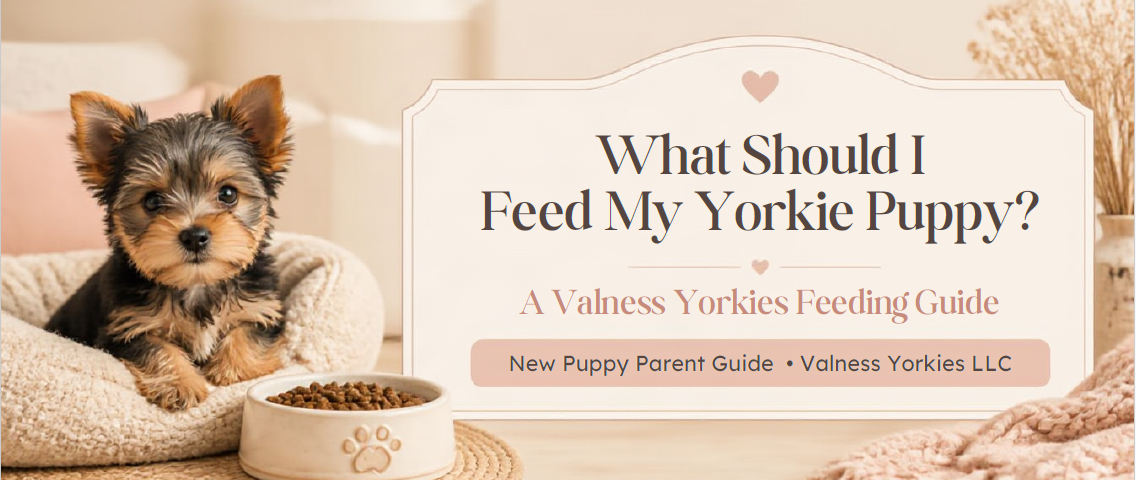
What Should I Feed My Yorkie Puppy?
A practical feeding guide for tiny puppies, growing Yorkies, and confident new owners
- • •
Feeding a tiny Yorkie puppy can feel confusing. New owners often hear different opinions about brands, portions, treats, schedules, and when to switch foods. The good news is that the basics are straightforward: young toy-breed puppies need consistent nutrition, regular meals, safe food choices, and changes made gradually.
At Valness Yorkies, our puppies go home with information about the food and routine they are accustomed to. Keeping that routine familiar during the first days home can make the transition easier on a puppy's stomach and appetite. Our puppies are currently raised on Royal Canin; families should confirm the exact formula their puppy has been eating before pickup.
|
Valness Puppy Parent Tip During the first few days home, do not judge appetite by whether food is sitting in the bowl. Watch your puppy actually eat. A very small puppy that is not eating and is weak, trembly, wobbly, unusually sleepy, or otherwise unwell needs prompt veterinary attention. |
How Often Should I Feed My Yorkie Puppy?
There is no single feeding schedule that fits every Yorkie puppy. Age, current weight, body condition, food calorie density, activity level, and health all matter. Young puppies usually do better with multiple small meals spaced through the day rather than one or two large meals.
A simple example schedule
|
Time of Day |
Example |
Why It Helps |
|
Morning |
Breakfast after waking/potty |
Restores energy after the night and begins a predictable routine. |
|
Midday |
Small meal as appropriate for age |
Helps very young puppies avoid long gaps between meals. |
|
Late afternoon / early evening |
Dinner |
Provides another balanced meal before evening wind-down. |
Important: This schedule is an example, not a prescription. Very small puppies may need a different plan based on breeder and veterinary guidance. Use the feeding guide on the puppy food as a starting point and ask your veterinarian to help adjust portions as your puppy grows.
Why Toy-Breed Puppies Need Regular Meals
Yorkie puppies have small stomachs and high energy needs. Very young and very small toy-breed puppies can be more vulnerable to hypoglycemia (low blood sugar), especially if they do not eat, are stressed, become ill, vomit, have diarrhea, get chilled, or expend a lot of energy.
- Possible warning signs can include weakness, trembling, wobbliness, unusual sleepiness, confusion, seizures, or collapse.
- A weak, unresponsive, seizing, or collapsing puppy may be experiencing an emergency and should receive immediate veterinary care.
- Do not rely on a puppy simply “sleeping it off” if behavior is abnormal or the puppy is difficult to wake.
Keep the Food Familiar at First
Homecoming is already a major change: new people, new smells, a new sleep space, and a new routine. Abruptly changing food at the same time can add digestive stress. Unless your veterinarian recommends otherwise, begin with the same food your puppy was eating before going home.
How to Change Puppy Foods Gradually
If you and your veterinarian decide to change foods, make the transition gradually. Some puppies need a slower transition than others, so watch stool quality, appetite, and comfort rather than treating the calendar as a rule.
|
Transition Period |
Example Mix |
|
Days 1-2 |
Mostly current food with a small amount of new food |
|
Days 3-4 |
About 75% current food / 25% new, moving toward half-and-half |
|
Days 5-7 |
More new food and less current food |
|
Days 8-10 |
Transition to the new food if your puppy is doing well |
|
Slow Down if Needed Vomiting, significant diarrhea, refusal to eat, weakness, or other concerning symptoms are reasons to contact your veterinarian rather than simply pushing through a food transition. |
Choosing a Puppy Food
Choose a complete and balanced diet formulated for growth and appropriate for your puppy's size. Small- or toy-breed formulas often have kibble pieces that are easier for a tiny mouth to manage and calorie density designed for small dogs.
- Look for a nutritional adequacy statement indicating the food is complete and balanced for growth or the appropriate life stage.
- Use the package feeding guide as a starting point, not an unchangeable rule.
- Monitor growth and body condition with your veterinarian rather than feeding to achieve a particular “tiny” adult size.
- If your puppy has a medical condition, poor growth, persistent digestive issues, or unusual appetite changes, ask your veterinarian for individualized nutrition advice.
How Much Should My Yorkie Puppy Eat?
A cup of one puppy food may contain far more or fewer calories than a cup of another, so there is no universal cup measurement for all Yorkies. Portion size should be based on the food being fed, your puppy's age and current weight, growth, activity, and body condition.
|
Healthy Growth Matters More Than Staying Tiny Do not intentionally underfeed a Yorkie puppy in an effort to keep the dog small. Puppies need enough complete, balanced nutrition to support normal growth, brain development, muscle, bone, and immune function. |
Treats: Tiny Dog, Tiny Treats
Treats are useful for training, bonding, and rewarding good choices, but a tiny puppy does not need a full-size treat every time. Break soft treats into very small pieces. Too many extras can reduce appetite for balanced puppy food and add more calories than owners realize.
Keep treats as a small part of the total daily diet and ask your veterinarian what is appropriate for your individual puppy. Pieces of the puppy's regular kibble can also work as training rewards.
What About Table Food?
Regularly feeding from the table can encourage begging, upset digestion, add excessive fat and calories, and expose a puppy to unsafe ingredients. If you want to share a dog-safe human food occasionally, ask your veterinarian what is appropriate and keep the portion tiny, plain, and unseasoned.
Foods Dogs Should Never Eat
|
Keep These Away From Your Yorkie This is not an exhaustive list. If your puppy eats something potentially toxic, contact your veterinarian or an animal poison-control service promptly rather than waiting for symptoms. |
- Chocolate
- Grapes and raisins
- Onions, garlic, chives, and related alliums
- Products containing xylitol (sometimes labeled birch sugar)
- Alcohol
- Caffeine, coffee, tea, and energy products
- Macadamia nuts
- Raw yeast dough
- Moldy or spoiled foods
- Cooked bones and very hard chews that can cause choking, obstruction, broken teeth, or injury
When Should My Yorkie Switch to Adult Food?
Small and toy breeds generally mature earlier than large breeds, but the right time to change depends on the individual puppy and the food being fed. Many small-breed dogs transition to adult food somewhere around 9 to 12 months, but that is a general range rather than a rule for every Yorkie.
Ask your veterinarian when your puppy's growth and body condition indicate that an adult formula is appropriate. When it is time, transition gradually rather than changing overnight.
Valness Yorkies First-Week Feeding Checklist
- Know the exact food and formula your puppy has been eating before pickup.
- Keep meal times consistent during the transition home.
- Measure portions instead of repeatedly topping off the bowl without knowing intake.
- Watch your puppy actually eat, especially during the first few days.
- Keep fresh water available as appropriate.
- Keep treats tiny and avoid routine table scraps.
- Do not abruptly change foods unless your veterinarian recommends it.
- Save the phone numbers for your regular veterinarian and nearest emergency veterinary hospital.
- Contact your veterinarian promptly if appetite changes are accompanied by weakness, vomiting, diarrhea, trembling, or unusual behavior.
When to Call Your Veterinarian
Because Yorkie puppies are so small, appetite and energy changes deserve careful attention. Contact your veterinarian promptly if your puppy:
- Repeatedly refuses food or has a persistent decrease in appetite
- Has repeated vomiting or significant/persistent diarrhea
- Seems weak, trembly, wobbly, confused, or unusually difficult to wake
- Has a swollen or painful abdomen
- Shows signs of dehydration
- May have swallowed a foreign object or potentially toxic food
- Otherwise seems seriously unwell or very different from normal
|
Emergency Warning Seizures, collapse, severe weakness, difficulty breathing, or unresponsiveness require urgent veterinary care. |
Good Nutrition Builds a Healthy Beginning
Feeding your Yorkie puppy does not need to be complicated. Start with the familiar food and routine your puppy already knows, offer regular appropriate meals, make changes gradually, limit extras, and pay attention to appetite, growth, and energy.
At Valness Yorkies, our goal is not simply to send a puppy home. We want our puppy families to feel prepared and supported as they build healthy routines that can last a lifetime. Mealtimes are part of that routine—and they can also become wonderful little moments of training, trust, and bonding.
|
Preparing for Your Valness Yorkie? Continue the Valness Yorkies New Puppy Parent Guide, view available puppies, or contact us with questions about preparing for your new puppy. |
Educational Disclaimer: This article provides general educational information and is not a substitute for individualized veterinary advice. Feeding needs vary by puppy, diet, age, size, and health status. Consult your puppy's veterinarian for specific feeding recommendations and for concerns about appetite, vomiting, diarrhea, weakness, growth, or possible toxin exposure.
