


0 How to Crate Train a Yorkie Without Making the Crate Scary
- Valness Yorkies Blog
- by Kathy Pittman
- 09/25/2026
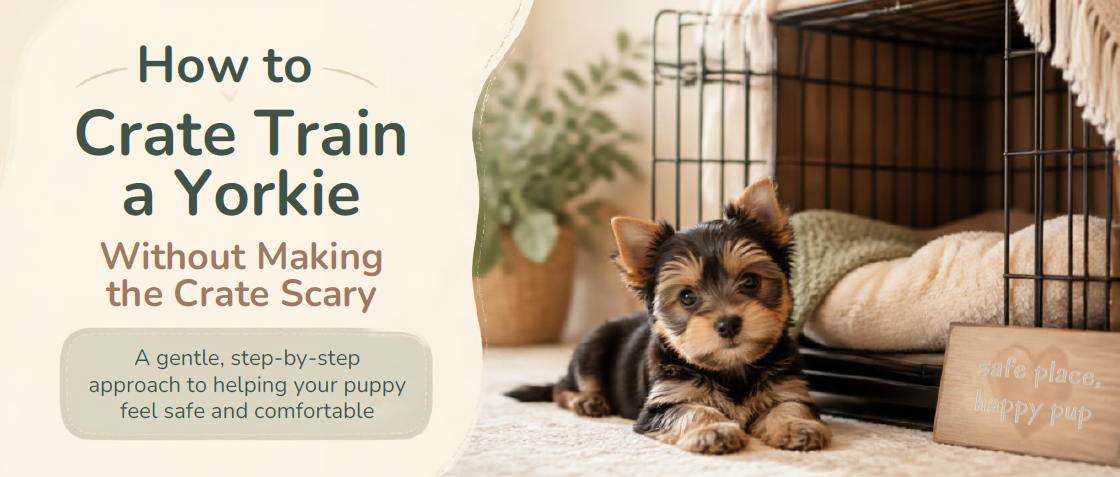
Valness Yorkies and How to Crate Train a Yorkie
A gentle, step-by-step approach to helping your puppy feel safe, secure, and comfortable.
|
The goal is a safe place - not simply a locked door. A crate can help with bedtime, housebreaking, travel, short periods of safe confinement, and teaching a puppy to settle. The goal is to help your Yorkie learn that the crate predicts comfort and rest - never fear or punishment. |
Bringing home a Yorkie puppy is exciting, but it is also a major transition for the puppy. Until now, your puppy may have slept near littermates and familiar people. Suddenly, bedtime, sounds, smells, and routines are different. A crate can become a reassuring “bedroom” when it is introduced gradually and positively.
Crate training should not mean shutting a frightened puppy inside and waiting for the crying to stop. Instead, build a positive association in small steps, meet legitimate needs, and give your puppy plenty of supervised life outside the crate.
1. Choosing the Right Crate
Choose a crate that is large enough for your puppy to stand, turn around, and lie down comfortably. A crate that is much too large may make it easier for a puppy to sleep at one end and eliminate at the other. A divider can help a larger crate fit a growing puppy.
Wire crates offer airflow and visibility and often include dividers. Plastic crates can feel more enclosed and are convenient for travel. Either type can work well when it is sturdy, secure, appropriately sized, and safe for a very small puppy.
Crate feature |
What to look for |
|
Size |
Room to stand, turn, and lie comfortably - without excessive unused space. |
|
Security |
A latch a tiny Yorkie cannot accidentally push open. |
|
Openings |
Spacing that will not allow a small head, paw, or jaw to become trapped. |
|
Flooring |
Easy to clean and fitted with a safe, comfortable surface. |
|
Growth |
A divider can make a larger crate appropriate as your puppy grows. |
|
Safety note Remove anything that could snag on the crate while the puppy is unattended, such as a collar or harness, if your veterinarian or trainer has advised that it presents an entanglement risk. Bedding should also match the puppy: a puppy who chews or shreds fabric may need a simpler setup. |
2. Where Should the Crate Go?
Place the crate where your puppy can rest without feeling isolated. During the day, a corner of the family room or another calm living area often works well. Your puppy can hear normal household life while still having a protected space for naps.
At night, many young puppies settle more easily when the crate is near the owner’s bed at first. This also makes it easier to hear when a very young puppy wakes and may need a potty trip. As the puppy becomes comfortable, the sleeping location can be adjusted gradually if desired.
- Avoid direct sun, heating vents, fireplaces, cold drafts, and other temperature extremes.
- Avoid putting the crate in the busiest walkway where the puppy can never truly rest.
- Teach children that the crate is the puppy’s quiet bedroom, not a play station.
3. Make the Crate Good News
Begin with the door open. Let your puppy investigate without pressure. The first goal is voluntary entry - not duration.
- Explore Toss a few pieces of puppy kibble or tiny appropriate treats near the opening and then just inside.
- Build comfort Feed a meal near the crate or inside it if your puppy is relaxed enough to eat there.
- Reward voluntary entry Praise calmly when your puppy chooses to walk in. Never shove or force the puppy through the door.
- Close the door briefly When the puppy is calm, close the door for a few seconds while you stay nearby, then reopen it before distress escalates.
- Increase gradually Build from seconds to minutes. Briefly step out of sight and return while the puppy is still coping well.
- Practice while you are home Do not let the crate mean only one thing: “My family is leaving.” Use it for peaceful naps and settling practice too.
|
Valness Puppy Parent Tip Practice calm crate time when you are home. If the crate only predicts that everyone disappears, it can be harder for a puppy to learn that the crate itself is safe. |
4. First-Night Setup
The first night can be the hardest because everything is new. A little planning can make it calmer for both puppy and family.
- Place the crate near your bed initially so the puppy does not feel completely isolated.
- Use a safe sleeping surface suited to your puppy’s chewing habits.
- Keep the evening calm rather than turning bedtime into a long play session.
- Take the puppy to the designated potty area immediately before bed.
- Keep nighttime potty trips quiet and boring: potty, calm praise, then back to bed.
- Never allow a tiny puppy to roam the house unsupervised overnight.
What If My Puppy Cries?
Some whining or protest can happen during the adjustment period, but do not assume every cry is “attention seeking.” A puppy may need to eliminate, feel frightened, be uncomfortable, be hungry depending on its age and feeding plan, or be unwell.
Check legitimate needs without turning every small whimper into exciting playtime. At the same time, prolonged “cry it out” is not appropriate when a puppy is escalating into panic.
|
Signs of significant distress Frantic escape attempts, persistent screaming or howling, heavy panting unrelated to heat or activity, excessive drooling, self-injury, or an inability to settle despite gradual training deserve attention. A veterinarian or qualified reward-based trainer can help if severe distress continues. |
5. How Long Can a Yorkie Puppy Reasonably Stay Crated?
There is no single crate-time formula that fits every puppy. Age, bladder control, sleep versus awake time, food and water intake, health, and individual development all matter. Young puppies need frequent potty opportunities, regular meals, exercise, social contact, training, and supervision. They should not spend most of their day in a crate.
Very young puppies often need frequent potty opportunities while awake, including after waking, eating or drinking, and active play. Overnight stretches may gradually lengthen as the puppy matures. If you must be away longer than your puppy can reasonably remain clean and comfortable, arrange a caregiver/potty break or use an appropriately designed safe puppy pen setup rather than expecting the puppy to hold it too long.
Crate time is for... |
Life outside the crate is for... |
|
Naps and bedtime |
Potty trips and meals |
|
Short safe periods |
Play, exploration, and exercise |
|
Learning to settle |
Training and socialization |
|
Travel or brief management |
Affection and family interaction |
|
A well-crate-trained puppy still needs a full life outside the crate. The crate is a training and safety tool - not all-day housing. |
6. Crate Training and Housebreaking
An appropriately sized crate can support housebreaking because many dogs prefer not to eliminate where they sleep. But a crate does not teach the entire skill by itself. Your puppy still needs frequent trips to the potty area, immediate praise or reward for success, close supervision when loose, and a consistent routine.
Never leave a puppy crated beyond its ability and then punish an accident. If accidents occur repeatedly, shorten the interval between potty opportunities and review the routine. Sudden changes in urination, diarrhea, straining, or other illness signs should be discussed with your veterinarian.
7. Crate Training vs. Punishment
|
The crate is never punishment. Do not angrily send your Yorkie to the crate, bang on the crate, yell through the bars, or use confinement to frighten the puppy. The puppy should associate the crate with safety, rest, and predictable routine - not owner anger. |
There will be times when you need a safe place for the puppy while you clean an accident, answer the door, cook, or handle another household task. Calmly placing the puppy in the crate for a short period is management, not punishment, as long as you keep the interaction neutral or positive.
Common Crate-Training Mistakes
- Moving too fast and expecting long periods before the puppy is comfortable.
- Using the crate only when everyone leaves the house.
- Choosing a crate that is much too large or too small.
- Expecting a young puppy to hold its bladder too long.
- Allowing children to poke, tease, wake, or pull a resting puppy from the crate.
- Using the crate after scolding so it becomes associated with anger.
- Opening the door during every minor protest, which can accidentally teach that noise always opens the door.
- Ignoring escalating panic, pain, illness, or legitimate potty needs.
- Crating a puppy without first providing an appropriate potty opportunity and some calm activity.
|
Teach children this rule When the puppy is resting in the crate, the crate is the puppy’s bedroom. Do not reach in, poke fingers through the bars, tease, wake, or drag the puppy out. An adult should supervise puppy-child interactions. |
A Simple 7-Day Crate Confidence Plan
Use this as a flexible progression, not a deadline. If your puppy needs more time at any stage, repeat that stage before moving on.
|
Day |
Focus |
|
Day 1 |
Open-door exploration with kibble/treats and calm praise. |
|
Day 2 |
Meals or short rests near or inside the crate with the door open. |
|
Day 3 |
Close the door briefly while you remain nearby. |
|
Day 4 |
Gradually extend calm closed-door time. |
|
Day 5 |
Step briefly out of sight and return before the puppy becomes distressed. |
|
Day 6 |
Practice a short, safe absence after potty and appropriate activity. |
|
Day 7 |
Keep building duration gradually based on your puppy’s comfort and needs. |
The Goal Is a Safe Place, Not a Locked Door
Successful crate training means your Yorkie can relax because the crate predicts safety, rest, and routine. Patience during the first days can pay off for years - at bedtime, during travel, after veterinary procedures, and whenever your dog needs a familiar place to settle.
Focus on gradual progress. Some puppies adapt quickly; others need more reassurance and shorter steps. Meeting your puppy’s physical needs while building positive associations is far more important than following a rigid timetable.
|
Preparing for Your Valness Yorkie? Continue the Valness Yorkies New Puppy Parent Guide with “Your Yorkie’s First Week Home,” “How to Housebreak a Valness Yorkie Puppy,” “What Should I Feed My Yorkie Puppy?” and “Yorkie Puppy Hypoglycemia: What Every New Owner Should Know.” Visit ValnessYorkies.com to learn more about our puppies and how they are raised. |
Educational Disclaimer: This article provides general puppy-training information and is not a substitute for veterinary advice. Individual puppies differ. Contact your veterinarian for health concerns and a qualified reward-based trainer or veterinary behavior professional for persistent or severe crate distress.
