


0 How Much Exercise Does A Yorkie Puppy Need?
- Valness Yorkies Blog
- by Kathy Pittman
- 09/25/2026
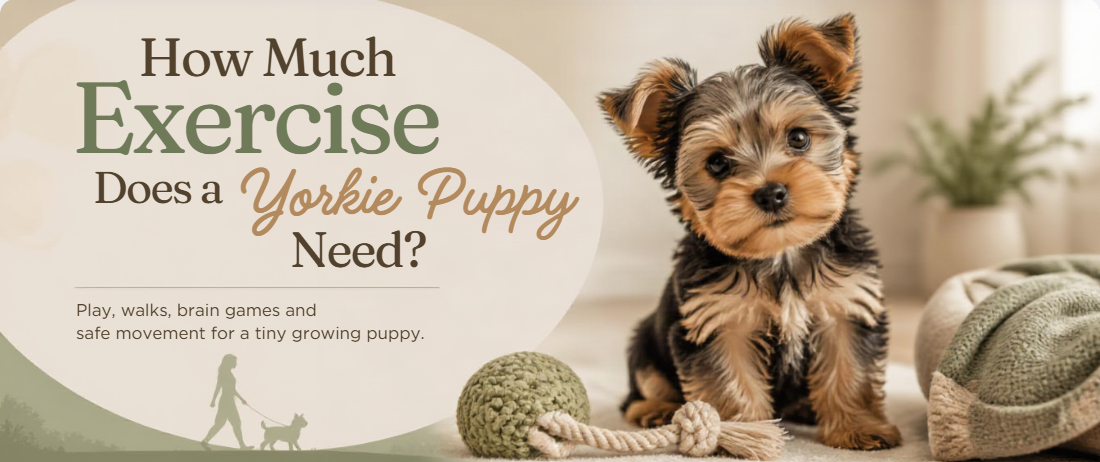
How Much Exercise Does a Yorkie Puppy Need?
Indoor play, short walks, brain games and safe movement for a tiny growing puppy
Yorkies may be tiny, but puppies can have surprising bursts of energy. The goal is not to wear a puppy out. Healthy puppy exercise is a mix of short periods of movement, play, training, exploration and plenty of rest. Because a Yorkie puppy is still growing, exercise should be age-appropriate, supervised and adjusted to the individual puppy.
|
The simple formula: MOVE + THINK + REST A balanced puppy day includes physical play, mental stimulation and enough sleep. A puppy does not need to be exhausted for an activity to be worthwhile. |
What Counts as Exercise for a Yorkie Puppy?
Exercise is more than taking a walk. For a young Yorkie, healthy activity can include indoor play, gentle exploring, short positive training sessions, sniffing games, safe social experiences and, when appropriate, short leash walks.
Indoor Play Is Real Exercise
Indoor play is especially useful for very young puppies, during bad weather, and while a veterinarian is guiding you on safe public exposure based on vaccination status and local disease risk. Several short play sessions usually suit a puppy better than one long, exhausting session.
Roll or gently toss a lightweight toy across a safe, non-slip floor.
Play gentle tug with a puppy-safe toy. Do not jerk the puppy, lift the puppy by the toy, or encourage rough neck movements.
Practice short recall games between family members in a safe room.
Hide a few pieces of kibble or tiny treats for the puppy to find.
Allow supervised exploration in a puppy-safe room or exercise pen.
Use two- to five-minute training sessions for name recognition, touch, sit, come and calm handling.
|
Valness Puppy Parent Tip Stop while your puppy is still happy and coordinated. Panting, collapsing into sleep or becoming wild and clumsy are not goals. Short successful sessions make it easier for a puppy to enjoy activity without becoming overtired. |
What About Short Walks?
Leash walks can provide exercise, sniffing, training and socialization, but public walking should begin gradually. Before taking a young puppy into areas used by unknown dogs, ask your veterinarian what is appropriate for your puppy based on age, vaccination status and local infectious-disease risk.
Start with brief, relaxed outings rather than focusing on distance or speed.
Let the puppy sniff and explore. Sniffing is mentally tiring and enriching.
Use a properly fitted harness or other equipment appropriate for a tiny Yorkie.
Avoid hot pavement, icy surfaces and temperature extremes. Small puppies can become chilled or overheated quickly.
Do not force a tired puppy to keep walking simply to finish a planned distance.
How Long Should a Yorkie Puppy Exercise?
There is no single minute-by-age formula that reliably fits every puppy. Activity needs vary with age, size, temperament, health, sleep, feeding, weather and the type of activity. A very young puppy may play for a few minutes and then sleep for a long stretch. That can be completely normal.
Rather than trying to hit a rigid number, build the day around multiple short activity periods and watch the puppy. Structured exercise can increase gradually as the puppy matures. If your puppy has an orthopedic, cardiac, respiratory or other health concern, ask your veterinarian for individualized guidance.
|
Signs It Is Time for a Break Slow or lagging movement • repeatedly sitting or lying down • losing interest • heavy panting that does not fit the conditions • stumbling or becoming less coordinated • seeking to be picked up or hide • irritability or frantic, overtired behavior |
Weakness, collapse, difficulty breathing, persistent limping, an abnormal gait or severe lethargy are not ordinary exercise fatigue and deserve prompt veterinary attention.
Mental Stimulation Matters Too
Yorkies are bright, curious terriers. Mental activity can satisfy a puppy without placing unnecessary stress on growing joints. A puppy that has used its nose and brain may be ready for a nap after only a few minutes.
Short positive-reinforcement training sessions
Food puzzles designed for a puppy of the correct size
Sniff-and-find games with kibble
Exploring new safe textures and surfaces
Learning to settle quietly on a mat or bed
Gentle handling and grooming practice
Rotating toys so old toys feel interesting again
Always supervise puzzle toys and remove anything that can be chewed apart or swallowed.
Protect Tiny Puppies From Jumps and Falls
For a small Yorkie puppy, a couch, adult bed or person’s arms can be a significant height. Puppies may be fearless before they understand the danger. Prevention is far safer than waiting for a puppy to learn after a fall.
Do not allow repeated jumping on or off beds and sofas.
Never encourage a puppy to jump from your arms.
Block unsupervised access to stairs when appropriate.
Prevent rough play with much larger dogs.
Use rugs or runners to improve traction on slick floors.
Lift the puppy securely, supporting the body rather than holding only the front end.
Use ramps or pet steps only when they are stable, suitable for the height and used under supervision.
|
Tiny Puppy, Big Fall Do not assume a small Yorkie puppy understands the danger of jumping from furniture. If a surface is high enough to cause concern, prevent the jump rather than hoping the puppy will choose not to do it. |
Avoiding Overexertion
Puppies often have more enthusiasm than judgment. Some will keep playing even after they are tired. Overtired puppies can also become more frantic rather than simply lying down, so a sudden burst of wild “zoomies” may sometimes be a sign that the puppy needs a calm environment and rest.
Give your puppy frequent opportunities to nap. Young puppies may sleep a large part of the day, and sleep is an important part of normal growth and development.
Exercise and Hypoglycemia in Very Small Puppies
Very young and very small toy-breed puppies can be vulnerable to low blood sugar, especially if they have not eaten, are stressed or ill, or expend a large amount of energy. Follow the puppy’s regular feeding schedule and avoid prolonged strenuous activity.
Possible warning signs include weakness, trembling, wobbliness, unusual lethargy, confusion, seizures or collapse. These signs require prompt veterinary attention, and severe signs are an emergency. For more detail, see the Valness Yorkies article “Yorkie Puppy Hypoglycemia: What Every New Owner Should Know.”
A Sample Balanced Puppy Day
This is an example, not a prescription. Your puppy’s age, feeding schedule, potty needs and veterinarian’s recommendations should guide the actual routine.
Wake up → potty → breakfast → brief gentle play or training → potty → nap
Later → potty → short exploration or mental game → nap
Midday meal if appropriate for age → potty → calm play → nap
Afternoon → short supervised play or walk if veterinarian has approved public outings → rest
Evening meal → potty → family interaction or a few minutes of training → calm wind-down
Final potty → bedtime
Safe Exercise Checklist
Ask your veterinarian about safe public outings and vaccination status.
Use properly fitted equipment for a tiny puppy.
Choose several short activity sessions instead of marathon exercise.
Provide plenty of naps and quiet recovery time.
Use safe, non-slip play surfaces.
Prevent jumps from furniture and other elevated surfaces.
Supervise interactions with children and larger dogs.
Watch weather and surface temperature.
Monitor meals and energy carefully in very small puppies.
Stop when the puppy shows signs of fatigue or loss of coordination.
Small Dog, Big Personality - Let Your Puppy Grow at Their Own Pace
Yorkie puppies do not need miles of walking to have a fulfilling day. Short play sessions, gentle exploration, brain games, positive training, family interaction and abundant sleep can provide an excellent foundation. The goal is a healthy, confident puppy - not an exhausted one.
|
Preparing for Your Valness Yorkie? Continue the Valness Yorkies New Puppy Parent Guide with “Your Yorkie’s First Week Home,” “What Should I Feed My Yorkie Puppy?”, “Yorkie Puppy Hypoglycemia: What Every New Owner Should Know,” “How to Crate Train a Yorkie Without Making the Crate Scary,” and the housebreaking guide. Visit ValnessYorkies.com to learn more about available puppies and how Valness Yorkies raises them. |
Valness Yorkies LLC • ValnessYorkies.com
Educational disclaimer: This article provides general puppy-care information and does not replace individualized veterinary advice. Exercise needs and safe public exposure vary by puppy, health status, age, vaccination status and local disease risk. Consult your veterinarian for recommendations for your puppy.
