


0 Yorkie Grooming 101: What New Owners Need to Know
- Valness Yorkies Blog
- by Kathy Pittman
- 09/26/2026
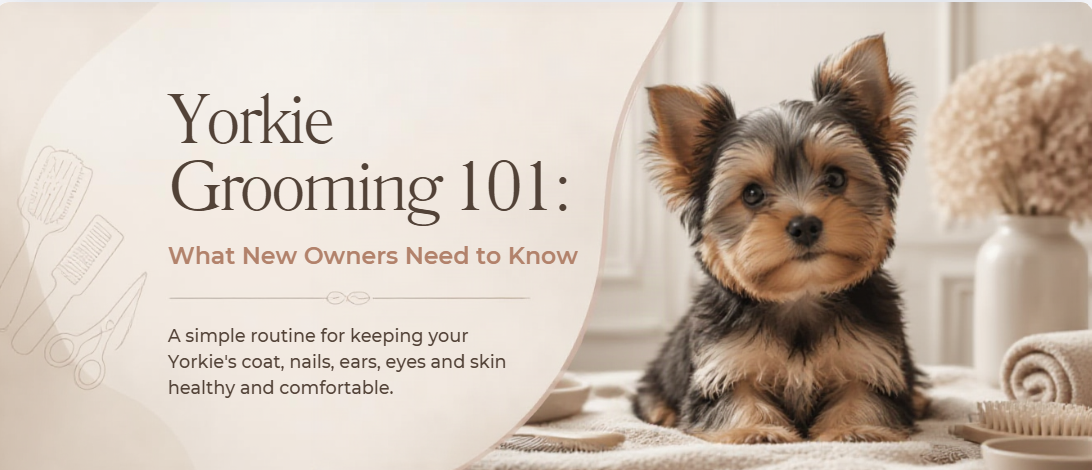
Yorkie Grooming 101:
What New Owners Need to Know
A simple routine for keeping your Yorkie clean, comfortable, and confident with grooming.
Yorkshire Terriers are known for their beautiful coats, but grooming is about much more than appearance. Regular grooming helps prevent tangles, keeps the face and sanitary areas clean, protects paw and nail comfort, and gives you frequent opportunities to notice changes in the skin, ears, eyes, or coat.
The easiest adult Yorkie to groom is often the puppy who learned early that brushing, paw handling, face cleaning, baths, and gentle ear care are normal parts of family life. Keep early sessions short, calm, and positive, and reward cooperation with praise or a tiny treat.
|
VALNESS PUPPY PARENT TIP Practice handling before you need a full grooming session. Touch the paws, lift the ears, stroke the face, and briefly brush the coat while your puppy is relaxed. A few positive minutes can be more useful than a long session that becomes frustrating. |
Brushing: The Foundation of Yorkie Coat Care
Yorkies have a fine, continuously growing coat that can tangle easily, especially as the hair gets longer. Common trouble spots include behind the ears, under the front legs, the chest, belly, legs, and areas where a collar or harness rubs.
How often should you brush? A long coat may need daily or near-daily attention, while a shorter companion trim may need less. Coat texture, activity, clothing, and individual tendency to mat all matter, so use the coat in front of you rather than a rigid schedule.
Use a small, gentle pin or slicker-style brush appropriate for a toy breed.
Work in small sections and support the hair near the skin so you are not pulling.
Follow with a metal comb. If the comb catches, there is still a tangle underneath.
Use a dog-safe detangling or conditioning spray if needed.
Do not yank through mats. Tight mats can pull painfully on the skin.
|
A COAT CAN LOOK BRUSHED ON TOP Finish by gently running a comb through the coat. This is one of the easiest ways to find hidden tangles before they become painful mats. |
If a mat is tight to the skin, large, or located near delicate areas, ask a professional groomer for help. Cutting a mat with scissors can accidentally cut the skin because loose skin may be pulled up inside the mat.
Bathing Your Yorkie Puppy
Bath frequency depends on coat length, lifestyle, skin condition, and your veterinarian or groomer’s guidance. Many companion Yorkies are bathed every few weeks or as needed, but there is no single schedule that fits every dog.
Brush and comb out tangles before the bath when practical.
Use lukewarm water and a mild shampoo made for dogs or puppies.
Keep shampoo and direct streams of water out of the eyes and ear canals.
Rinse very thoroughly. Shampoo residue can irritate the skin.
Towel dry gently and keep your tiny puppy warm until completely dry.
If you use a dryer, use a comfortable low or warm setting at a safe distance and avoid overheating.
|
BATH DAY CHECKLIST Brush/comb first • Lukewarm water • Puppy-safe shampoo • Rinse thoroughly • Dry completely • Keep puppy warm • Praise calm behavior |
Nail Trimming
Tiny Yorkie nails still need regular attention. Nails that grow too long can affect comfort, traction, and how the paw contacts the ground. Start with frequent gentle paw handling so nail care does not feel like a surprise.
Use small-dog nail clippers or an appropriate nail grinder if your puppy tolerates it. Trim only a small amount at a time and avoid the quick, which contains blood vessels and nerves. Dark nails can make the quick difficult to see, so ask your veterinarian or groomer to demonstrate if you are unsure. Check dewclaws too, if your puppy has them, because they do not wear down normally.
|
HELPFUL TO HAVE ON HAND Styptic powder can help with a minor nail nick. If bleeding is significant, does not stop, or the nail is torn or injured, contact your veterinarian. |
Ear Care
For routine ear care, look and smell before you clean. A healthy ear should not have marked redness, swelling, strong odor, heavy discharge, or obvious pain.
Use only a dog ear-cleaning product recommended by your veterinarian when cleaning is needed.
Never push cotton swabs deep into the ear canal.
Keep bath water out of the ear canals as much as practical and gently dry the outer ear.
Do not use medicated ear drops or drying products to treat a suspected infection unless your veterinarian has advised them.
Repeated head shaking or scratching, odor, discharge, redness, swelling, pain, or recurring ear problems are reasons to contact your veterinarian. Ear infections, mites, allergies, foreign material, and other problems can look similar but require different treatment.
Eye and Face Cleaning
Yorkies often need a little help keeping the hair around the eyes and muzzle clean. Gently wipe away normal debris with a soft damp cloth or a pet-safe eye-area wipe, using a clean portion for each eye. Keep facial hair neatly managed so it does not constantly rub the eye.
|
EYE SAFETY Do not put peroxide, harsh stain removers, shampoo, or other irritating products near the eyes. Persistent tearing, squinting, redness, cloudiness, swelling, thick discharge, pawing at the eye, or apparent pain should be evaluated by a veterinarian promptly. |
Professional Grooming
Many Yorkie families use a professional groomer every several weeks, depending on haircut, coat length, and lifestyle. A groomer experienced with toy breeds can help with trims, sanitary care, nails, coat maintenance, and introducing a puppy to grooming equipment in a controlled setting.
Before your puppy’s first salon visit, ask your veterinarian when salon exposure is appropriate based on vaccination status and local infectious-disease risk. Tell the groomer about any medical concerns, fear, handling sensitivities, or previous grooming experiences.
Ask Your Groomer |
Why It Matters |
|
Do you regularly groom Yorkies or other toy breeds? |
Tiny dogs need careful handling and appropriately sized equipment. |
|
How do you introduce puppies to grooming? |
Short, positive early visits can build confidence. |
|
How do you handle mats? |
Severe mats should be removed safely, not painfully pulled apart. |
|
What is included in the appointment? |
Ask about nails, ears, sanitary trim, bathing, and haircut. |
|
What should I do between visits? |
Home maintenance prevents tangles and keeps grooming easier. |
Puppy Coat vs. Adult Coat
A Yorkie puppy’s coat changes as the dog matures. Puppies are typically born much darker, and many gradually develop the characteristic blue-and-tan coloring and a more adult coat texture over time. The exact timing, shade, and texture vary with genetics and the individual dog.
During coat transition, you may notice changes in texture and an increase in tangling. Grooming needs can shift as the puppy grows, so continue brushing and adjust your routine rather than trying to predict an exact date when the “adult coat” will arrive.
|
FOCUS ON COAT HEALTH, NOT A DEADLINE Color and texture can develop at different rates. A clean, comfortable, mat-free coat matters more than reaching a particular look by a particular age. |
Long Coat or Puppy Cut?
Both can be appropriate for a family Yorkie. A long coat creates the classic flowing Yorkie look but requires substantial brushing, combing, bathing, and maintenance. A shorter puppy cut is often easier for an active household, but “shorter” does not mean “no grooming.” Regular brushing, bathing, face care, and scheduled trims are still needed.
Don’t Forget Dental Care
Dental care is worth introducing while your Yorkie is young. Start gradually with a dog toothbrush or appropriately sized brush and toothpaste made for dogs - never human toothpaste. Regular brushing, ideally daily when tolerated, can be an important part of preventive care, along with veterinary dental examinations and professional cleaning when recommended.
Grooming Safety for a Tiny Yorkie
Never leave a puppy unattended on a grooming table, counter, sink, or other elevated surface.
Use non-slip footing so your puppy feels secure.
Do not use scissors close to a moving puppy unless you are skilled and can work safely.
Keep your puppy warm while wet and supervise around dryers, cords, and grooming tools.
Avoid human shampoos, essential oils, and other products unless your veterinarian says they are safe for your dog.
Stop and reset if your puppy becomes highly distressed. Grooming should build trust, not fear.
Get professional help with severe matting rather than risking skin injury at home.
A Simple Valness Grooming Routine
Use this as general guidance and adjust it for your puppy’s coat, haircut, lifestyle, and veterinary or grooming recommendations.
How Often |
What to Check or Do |
|
Daily / regularly |
Quick coat and face check; gently remove normal eye debris; short handling practice; look for tangles. |
|
Several times weekly to daily |
Brush and comb thoroughly depending on coat length and tendency to tangle. |
|
Weekly |
Check nails, ears, teeth, skin, paw pads, and coat condition. |
|
As needed / every few weeks |
Bath depending on coat, lifestyle, and professional guidance. |
|
Every several weeks |
Professional grooming or trim depending on haircut and coat needs. |
|
CALL YOUR VETERINARIAN IF YOU NOTICE Persistent or recurrent ear odor/discharge • A painful, red, or swollen ear • Eye redness, squinting, cloudiness, injury, or significant discharge • Unexplained hair loss, sores, intense itching, rash, or unusual skin odor • A broken/injured nail or bleeding that will not stop • New lumps, skin changes, or anything that appears painful or abnormal |
Grooming Is Care - and Bonding
Grooming does not have to become a wrestling match. Starting young, keeping sessions short, using gentle positive handling, and maintaining a predictable routine can help your Yorkie learn to cooperate. Those quiet grooming moments also give you one-on-one time to notice small changes and strengthen trust.
|
PREPARING FOR YOUR VALNESS YORKIE? Continue the Valness Yorkies New Puppy Parent Guide with “Your Yorkie’s First Week Home,” “What Should I Feed My Yorkie Puppy?”, “How Much Exercise Does a Yorkie Puppy Need?”, “How to Crate Train a Yorkie Without Making the Crate Scary,” and “Yorkie Puppy Hypoglycemia: What Every New Owner Should Know.” Visit ValnessYorkies.com to learn more about our puppies and how they are raised. |
Educational Disclaimer: This article provides general grooming and puppy-care information and does not replace individualized veterinary advice. Coat, skin, ear, eye, dental, and nail needs vary by puppy. Consult your veterinarian for health concerns and a qualified professional groomer for grooming tasks you are not comfortable performing safely.
