


0 Yorkie Teeth: Why Dental Care Should Start During Puppyhood
- Valness Yorkies Blog
- by Kathy Pittman
- 09/26/2026
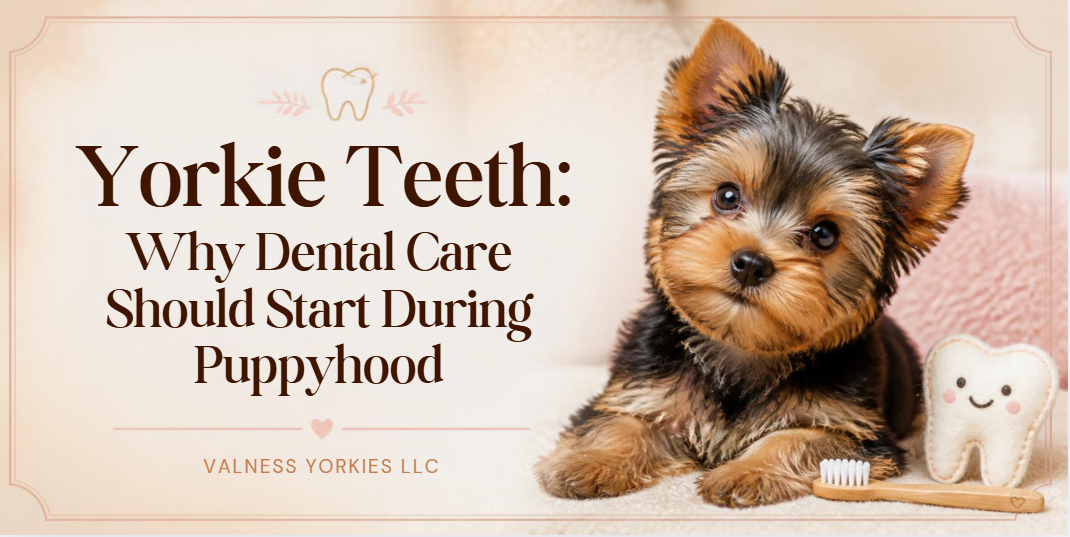
Yorkie Teeth: Why Dental Care Should Start During Puppyhood
A Valness Yorkies guide to brushing, baby teeth, dental chews, small-breed dental health, and veterinary care
|
Quick answer Dental care should begin while your Yorkie is still a puppy. Early, gentle practice makes tooth brushing easier later and gives you a chance to notice retained baby teeth, gum irritation, broken teeth, unusual odor, or other problems before they become more serious. |
Yorkies are tiny dogs with very small mouths, so there is not much room for crowded teeth, plaque, and tartar. Good dental care is not just about fresh breath - it supports comfort, eating, and long-term oral health. The best time to build those habits is before your puppy decides that a toothbrush is something suspicious.
At Valness Yorkies, we encourage new puppy families to make mouth handling and tooth brushing part of the same calm routine as brushing the coat, checking the ears, and trimming nails. A few positive minutes now can make adult dental care much easier.
Why Start Dental Care During Puppyhood?
Puppyhood is the ideal time to teach a Yorkie that having the lips lifted, mouth touched, and teeth brushed is normal. The goal is not to scrub every tooth perfectly on the first day. The goal is to build trust and create a routine that your puppy will accept throughout life.
Puppies usually adapt to new handling more easily when sessions are short and positive.
Regular mouth checks help you notice changes as baby teeth are replaced by adult teeth.
Starting early prevents dental care from becoming a stressful “new” experience later.
Small breeds can develop dental problems at a relatively young age, so prevention matters.
Getting Your Yorkie Puppy Accustomed to Tooth Brushing
Use a toothbrush or finger brush made for dogs and toothpaste formulated specifically for pets. Do not use human toothpaste; some ingredients are unsafe for dogs, and human toothpaste is not designed to be swallowed by pets.
Start with gentle face and muzzle handling. Briefly lift the lips and reward calm behavior.
Let your puppy taste a tiny amount of dog toothpaste from your finger so the flavor becomes familiar.
Rub a finger gently along the outer surfaces of a few teeth and gums for only a few seconds.
Introduce the toothbrush slowly. Brush just a few teeth at first, using gentle circular motions near the gumline.
Gradually increase the number of teeth you brush as your puppy becomes comfortable.
Keep the session upbeat and end before your puppy becomes frustrated.
|
Valness Puppy Parent Tip Consistency matters more than perfection. A 30-second positive session that happens regularly is more useful than a long wrestling match that teaches your puppy to fear dental care. |
How Often Should I Brush My Yorkie’s Teeth?
Daily brushing provides the most consistent plaque control when your puppy tolerates it. If daily brushing is not yet realistic, work toward it gradually. Your veterinarian can recommend a home-care routine based on your Yorkie’s age, mouth, and individual dental health.
Retained Baby Teeth: A Common Concern in Toy Breeds
Puppies are born without visible teeth, develop deciduous (baby) teeth, and then replace them with permanent adult teeth. In some toy-breed puppies, a baby tooth does not fall out when the adult tooth comes in. This is called a retained deciduous tooth.
Retained baby teeth are especially important to watch in the canine teeth - the long pointed teeth - although any baby tooth can be retained. When two teeth occupy the space meant for one, food and plaque can become trapped, teeth can crowd, and the bite may be affected.
|
What to look for If you notice what appears to be “two teeth in one spot,” an adult tooth erupting beside a baby tooth, a tooth that remains after the adult tooth is clearly present, or unusual crowding, ask your veterinarian to examine your puppy’s mouth. Do not try to pull a retained baby tooth at home. |
Your veterinarian will decide whether a retained tooth should be monitored or removed and when treatment is appropriate. Decisions depend on the tooth involved, the puppy’s age, the position of the adult tooth, and the overall bite.
What Is Normal During Teething?
During teething, puppies may chew more, have mildly tender gums, or lose tiny baby teeth that you never find because they are swallowed harmlessly while eating or playing. Mild blood spotting on a toy can sometimes occur as a loose baby tooth falls out. However, persistent bleeding, significant swelling, broken teeth, severe pain, inability to eat, or a foul odor deserves veterinary attention.
Dental Chews: Helpful, but Not a Replacement for Brushing
Dental chews can be a useful addition to a dental-care plan, but they should not replace tooth brushing or veterinary dental care. Choose products that are appropriate for your puppy’s age and very small size, and supervise chewing.
Ask your veterinarian which dental products are appropriate for your puppy’s age and size.
Look for products designed specifically for dogs; products carrying the Veterinary Oral Health Council (VOHC) Accepted seal have met defined standards for plaque or tartar control.
Use a chew large enough that your puppy cannot swallow it whole or break off a dangerous chunk.
Count chew calories as part of the daily diet, especially for a tiny puppy.
Discard chews that become small enough to swallow or develop sharp edges.
|
Avoid extremely hard chews Very hard objects can crack teeth. Antlers, hard bones, rocks, very hard nylon-style objects, and other items that do not flex at all may increase the risk of a fractured tooth. Ask your veterinarian for safer chew options for your individual puppy. |
Why Dental Disease Can Be a Bigger Issue for Small Breeds
Small dogs have the same basic number of adult teeth as larger dogs, but those teeth must fit into a much smaller mouth. Crowding and close spacing can make plaque control more challenging. Yorkies may therefore benefit from especially consistent home care and regular veterinary dental examinations.
Plaque is a soft bacterial film that forms on teeth. If it is not removed, it can harden into tartar (calculus). Inflammation around the gums and supporting tissues can progress to periodontal disease. Once tartar is firmly attached beneath or along the gumline, home brushing cannot simply remove it; professional veterinary dental treatment may be needed.
When Should I Involve the Veterinarian?
Your veterinarian should look at your puppy’s mouth during routine puppy examinations. Dental development, retained baby teeth, bite alignment, gum health, and tooth injuries are all things that can be checked while your puppy is growing.
What you notice |
Why it matters |
|
Strong or worsening bad breath |
Can accompany plaque, gum inflammation, infection, retained teeth, or another oral problem. |
|
Red, swollen, or bleeding gums |
May indicate gingivitis, injury, or another dental concern. |
|
Two teeth in the same position |
May be a retained baby tooth beside an erupting adult tooth. |
|
Broken, discolored, or loose adult tooth |
Needs veterinary assessment; damaged teeth can be painful even when a puppy still eats. |
|
Dropping food, chewing on one side, or refusing hard food |
Can be a sign of mouth pain. |
|
Pawing at the mouth, facial swelling, or obvious pain |
Should be evaluated promptly. |
|
Persistent mouth bleeding or significant injury |
Seek veterinary care promptly; severe bleeding or trauma can be urgent. |
What About Professional Dental Cleanings?
Home care slows plaque and tartar buildup, but it does not replace veterinary dental examinations. If your veterinarian identifies periodontal disease or significant tartar, they may recommend a professional dental cleaning. A proper veterinary dental procedure typically includes an oral examination and cleaning above and below the gumline under anesthesia, with dental X-rays or other treatment when indicated.
The timing of a first professional cleaning is not the same for every Yorkie. Your veterinarian will base recommendations on what they see in your dog’s mouth rather than on age alone.
A Simple Yorkie Dental-Care Routine
Daily or as close to daily as practical
Brush with dog toothpaste once your puppy is comfortable. Briefly look at gums and teeth.
Several times each week
Practice lip lifting and mouth handling if your puppy is still learning.
As recommended
Offer veterinarian-approved dental chews or dental products appropriate for a tiny dog.
During teething
Watch for crowded teeth or an adult tooth erupting beside a retained baby tooth.
Routine vet visits
Ask the veterinarian to check dental development, retained teeth, bite, gums, and overall oral health.
When should I start brushing my Yorkie puppy’s teeth?
You can begin gentle mouth handling as soon as your puppy settles into your home. Introduce dog toothpaste and a small toothbrush gradually. The earlier the experience becomes routine and positive, the easier it usually is to maintain.
Is puppy breath supposed to smell bad?
A mild puppy-mouth odor can vary, but persistent or strong bad breath is worth discussing with your veterinarian, especially if you also see red gums, retained teeth, pain, or appetite changes.
Can dental chews replace brushing?
No. Dental chews can supplement home care, but brushing remains one of the most direct ways to disrupt plaque on the tooth surface.
Should I pull a loose baby tooth?
No. Let normal baby teeth fall out on their own. If a baby tooth appears retained beside an adult tooth or looks abnormal, have your veterinarian examine it.
Do Yorkies need professional dental cleanings?
Some do, and the timing varies. Your veterinarian can tell you when professional cleaning is appropriate based on tartar, gum health, crowding, and periodontal findings.
A Healthy Mouth Starts With Small Habits
Dental care does not have to be complicated. Start with a few seconds of calm handling, introduce brushing gradually, pay attention during teething, and ask your veterinarian to check your Yorkie’s teeth as your puppy grows. Those small habits can help protect comfort and oral health for years to come.
|
Preparing for Your Valness Yorkie? Continue the Valness Yorkies New Puppy Parent Guide with “What Should I Feed My Yorkie Puppy?”, “Yorkie Puppy Hypoglycemia: What Every New Owner Should Know,” and “How Much Exercise Does a Yorkie Puppy Need?” Visit ValnessYorkies.com to learn more about our puppies and how they are raised. |
Important: This article provides general educational information and is not a substitute for an examination or individualized advice from your veterinarian. Contact your veterinarian for retained baby teeth, mouth pain, broken teeth, facial swelling, persistent bleeding, difficulty eating, or any dental concern.
