


0 When Can My Yorkie Puppy Meet Other Dogs?
- Valness Yorkies Blog
- by Kathy Pittman
- 09/26/2026
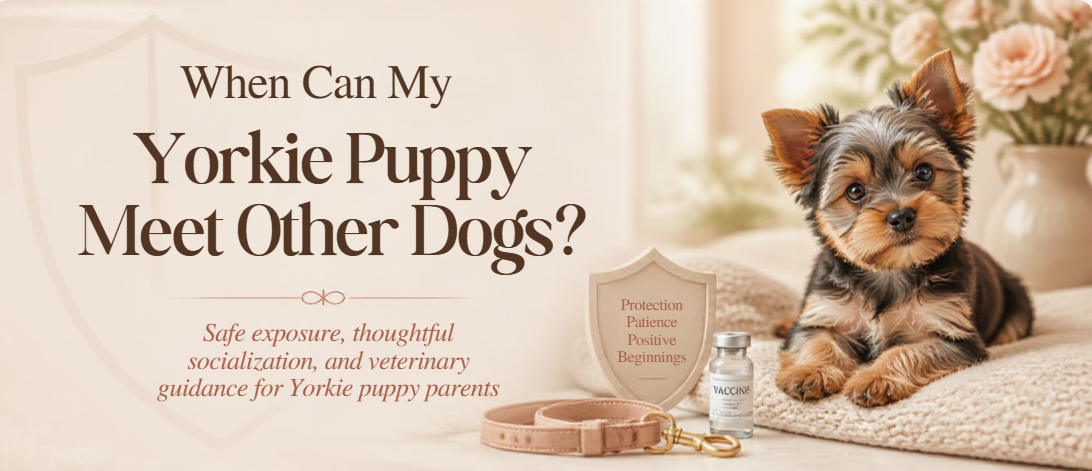
When Can My Yorkie Puppy
Meet Other Dogs?
How to balance early socialization with vaccination status, disease exposure, and safe introductions
|
QUICK ANSWER |
|
Socialization should begin early, but it does not have to mean taking a young puppy everywhere. Before the vaccine series is complete, choose controlled, low-risk experiences: healthy vaccinated dogs you know, carefully managed visitors, clean private spaces, and well-run puppy classes that follow veterinary vaccine and sanitation requirements. Ask your veterinarian when your puppy can safely use public dog areas because local risks for parvovirus, leptospirosis, canine influenza and other infections vary by community. |
Yorkie puppies have an important job during early puppyhood: learning that people, dogs, sounds, surfaces and everyday life are safe. At the same time, their immune protection is still developing. The goal is not to choose between socialization and disease prevention - it is to do both thoughtfully.
Socialization Is More Than Meeting Dogs
Good socialization means helping a puppy build positive, age-appropriate experiences without overwhelming them. Dog-to-dog play is only one part of it. A Yorkie puppy can also learn through calm exposure to:
Different people, voices, hats, coats and mobility aids
Household sounds, grooming tools and gentle handling
Car rides, carriers, new surfaces and safe outdoor sights
Calm, vaccinated dogs with known health histories
Short positive training sessions and quiet observation from a safe distance
|
VALNESS PUPPY PARENT TIP |
|
A puppy can be socialized without walking on high-traffic public ground. Carrying your Yorkie, using a clean stroller or carrier, visiting a private yard, or watching the world from a safe location can provide valuable exposure while reducing unnecessary contact with contaminated surfaces. |
Why Vaccination Status Matters
Young puppies receive a series of core vaccines because maternal antibodies can interfere with early doses and protection develops over time. Your veterinarian will determine the schedule that fits your puppy, medical history and local disease risk. Many puppies receive their final initial core-vaccine dose at about 16 weeks of age, but some need later vaccination based on individual circumstances or local risk.
Until your veterinarian says public ground is appropriate, be especially cautious with places where many unknown dogs eliminate or walk. Parvovirus, for example, can persist in the environment and may be carried on contaminated shoes, soil and surfaces.
Usually Lower Risk |
Usually Higher Risk Before Vet Clearance |
|
Your own clean home and private yard |
Dog parks and communal dog runs |
|
Healthy, vaccinated dogs you know |
Pet-store floors and busy pet relief areas |
|
Carefully screened puppy class |
Shared apartment potty areas used by many dogs |
|
Being carried in public |
Unknown dogs with uncertain vaccine or health status |
|
Visitors in your home |
Areas with recent vomiting, diarrhea or known disease outbreaks |
Can My Puppy Meet a Friend or Family Member's Dog?
Often, yes - if the meeting is carefully controlled and your veterinarian has not advised otherwise. Choose an adult dog that is healthy, appropriately vaccinated, gentle with puppies and comfortable around small dogs. Meet in a clean private area rather than a public dog park.
Start with one calm dog, not a group.
Keep the first meeting short and closely supervised.
Allow both dogs space to move away; do not force nose-to-nose contact.
Interrupt rough play, body slamming, relentless chasing or pinning.
Separate food, chews and high-value toys at first.
Because Yorkies are tiny, supervise size-mismatched play even when the larger dog is friendly.
|
WATCH YOUR PUPPY, NOT THE CLOCK |
|
A good introduction may last only a few minutes. End while the puppy is still comfortable. Hiding, freezing, repeated escape attempts, tucked posture, frantic behavior or inability to disengage are signs the interaction needs more distance or a break. |
What About Puppy Classes?
A well-run puppy class can offer valuable training and social learning before the vaccine series is fully complete, but the program should have sensible health safeguards. Ask your veterinarian whether a class is appropriate for your puppy and ask the training facility about its policies.
Ask the Class |
What You Want to Hear |
|
What vaccines are required? |
Requirements are age-appropriate and consistent with veterinary guidance. |
|
How is the floor cleaned? |
The facility uses a clear sanitation protocol and cleans accidents promptly. |
|
Are sick puppies excluded? |
Yes - coughing, vomiting, diarrhea or contagious illness means staying home. |
|
How large are groups? |
Small enough for safe supervision and controlled play. |
|
How is play managed? |
Puppies are matched thoughtfully; shy or tiny puppies are not overwhelmed. |
|
What training methods are used? |
Reward-based methods that avoid fear, force and intimidation. |
|
GOOD PUPPY CLASS DOES NOT MEAN FREE-FOR-ALL PLAY |
|
The best classes teach puppies to focus around other dogs, settle, respond to their owners and enjoy brief appropriate interactions. Constant wrestling is not the goal. |
Visitors Are Socialization Too
Inviting calm people into your home can give a young Yorkie valuable social experience without exposing them to a high-traffic public dog area. Keep visits short and positive, and let the puppy approach rather than being passed from person to person.
Ask visitors not to bring sick dogs.
Have visitors wash hands if they have just handled other animals.
If local parvovirus risk is high, ask your veterinarian whether shoes should remain at the door.
Supervise children closely and teach them to sit, use gentle hands and allow the puppy to move away.
Give your puppy quiet rest after visitors; overtired puppies often become bitey, frantic or unable to settle.
A Safer Introduction: Step by Step
Step |
What It Looks Like |
|
1. Choose the right dog |
Healthy, vaccinated, calm, socially appropriate and comfortable with small dogs. |
|
2. Choose the right place |
A clean private home or yard, or another location approved by your veterinarian. |
|
3. Start with space |
Let the dogs notice each other without being pushed into face-to-face contact. |
|
4. Reward calm behavior |
Praise and reward checking in, sniffing politely, disengaging and relaxed body language. |
|
5. Keep it short |
A few good minutes are better than continuing until one puppy is tired or overwhelmed. |
|
6. Separate before problems |
Use gates, pens, crates or leashes as management tools, not punishment. |
Dog Parks: Usually Not the First Step
Dog parks can expose a puppy to unknown dogs, uncontrolled play, shared water and contaminated ground. Even after vaccination, a dog park may be too intense for a tiny or inexperienced Yorkie. Calm one-on-one play dates and structured classes are often easier places to build good social skills first.
Socialization Without Ground Exposure
If your veterinarian wants your puppy off public ground for now, you can still create a rich socialization plan. Keep every experience short and positive:
Carry the puppy outside to watch people, traffic and bicycles from a safe distance.
Use a clean carrier or stroller for brief outings.
Invite different calm visitors into your home.
Practice gentle brushing, paw handling, ear checks and looking in the mouth.
Play recordings of household and community sounds at low volume.
Introduce safe surfaces at home: carpet, tile, grass in a private yard, rubber mat and a low stable platform.
Arrange meetings with one known healthy vaccinated dog at a time.
DO NOT WAIT FOR "FULL VACCINATION" TO TEACH YOUR PUPPY ABOUT LIFE |
|
Early social development matters. The safer approach is controlled exposure - not isolation and not unrestricted public contact. Your veterinarian can help you decide which experiences are appropriate where you live. |
How Local Disease Risk Changes the Answer
There is no single nationwide rule for the exact day every Yorkie puppy can safely walk everywhere. Risk can change with geography, season, local outbreaks, wildlife exposure, housing type and the number of dogs using shared spaces. Your veterinarian is the best source for local guidance.
Ask specifically about:
Parvovirus activity in your community
Leptospirosis risk from wildlife, standing water and local environment
Canine influenza or respiratory outbreaks
Bordetella recommendations for classes, grooming or boarding
When your puppy may safely use sidewalks, parks, pet stores and shared potty areas
A Simple Socialization Plan for a Young Yorkie
|
Experience |
Safer Early-Puppy Version |
|
Meet people |
One or two calm visitors at home; let puppy approach. |
|
See other dogs |
Known healthy vaccinated dog, supervised one-on-one. |
|
Go outside |
Carry puppy or use clean carrier/stroller until vet clears public ground. |
|
Learn around dogs |
Well-run puppy class with health and sanitation policies. |
|
Explore surfaces |
Clean private home/yard and controlled surfaces. |
|
Practice calmness |
Reward resting, looking and disengaging - not just play. |
Signs an Introduction Is Going Well
Loose, wiggly body language
Curious sniffing with easy disengagement
Play bows and balanced turn-taking
Puppy checks back in with you
Dog can pause and settle after play
Both dogs choose to re-engage rather than being forced
Stop or Create More Distance If You See
Repeated hiding or escape attempts
Freezing, cowering or tucked posture
Relentless chasing or pinning
A large dog repeatedly body-slamming the puppy
Guarding of food, toys or people
Escalating barking, snapping or inability to calm down
Any sign of illness such as coughing, vomiting, diarrhea, nasal discharge or unusual lethargy
|
WHEN TO CALL YOUR VETERINARIAN |
|
Contact your veterinarian promptly if your puppy has been exposed to a dog known or suspected to have a contagious illness, or if your puppy develops vomiting, diarrhea, coughing, nasal discharge, fever, marked lethargy, loss of appetite or other concerning signs. Very young and tiny puppies can become dehydrated or weak quickly. |
Frequently Asked Questions
Can my puppy meet dogs before all vaccinations are finished?
Often yes, in carefully controlled situations with known healthy vaccinated dogs and veterinarian guidance. Avoid high-risk public areas until your veterinarian clears them.
Can friends bring their dogs to my house?
Potentially, if those dogs are healthy, vaccinated, good with puppies and your veterinarian has not advised otherwise. One calm dog at a time is easier to manage.
Is a puppy class safe before the vaccine series is complete?
Many veterinarians support carefully managed puppy classes with vaccine requirements and strong sanitation. Ask your veterinarian and the facility about their policies.
When can my puppy go to a dog park?
Dog parks are usually not an ideal first socialization setting. Wait for veterinary clearance for disease exposure and consider whether your tiny Yorkie is behaviorally ready for uncontrolled groups.
What if my puppy seems afraid of another dog?
Increase distance, stop forcing interaction and reward calm observation. Fear is not something a puppy should be pushed through.
The Goal: Safe Exposure, Not Maximum Exposure
A well-socialized Yorkie is not a puppy who has met the greatest number of dogs. It is a puppy who has learned that new experiences can be calm, safe and manageable. Thoughtful socialization protects emotional development while sensible disease precautions protect physical health.
Your veterinarian can help you decide when your individual puppy can move from controlled experiences to neighborhood walks and other public spaces based on age, vaccines, health and the disease patterns in your area.
|
CONTINUE THE VALNESS YORKIES NEW PUPPY PARENT GUIDE |
|
Next reads: Puppy-Proofing Your Home for a Tiny Yorkie | Your Yorkie's First Week Home | How Much Exercise Does a Yorkie Puppy Need? | How to Crate Train a Yorkie Without Making the Crate Scary |
|
EDUCATIONAL NOTE |
|
This article provides general puppy-care information and is not a substitute for veterinary advice. Vaccination schedules, disease prevalence and safe public exposure vary by puppy and location. Follow your veterinarian's recommendations for your Yorkie puppy, especially if there is a local outbreak or your puppy has a medical condition. |
