


0 How to Prevent Separation Anxiety in Your Yorkie Puppy
- Valness Yorkies Blog
- by Kathy Pittman
- 09/26/2026
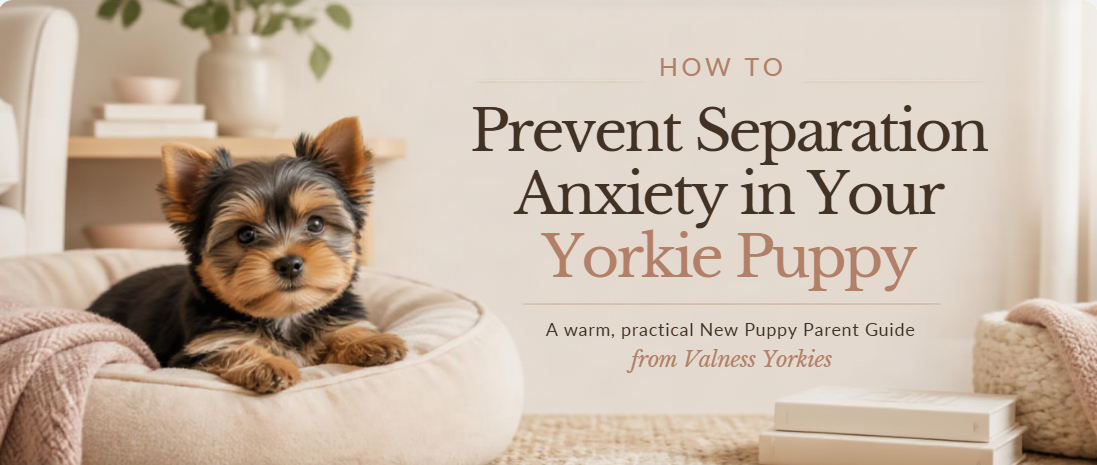
How to Prevent Separation Anxiety
in Your Yorkie Puppy
Building confidence, calm independence, and a safe routine from the very beginning
|
THE BIG IDEA You cannot guarantee that a puppy will never develop separation-related problems. But you can lower the risk by teaching your Yorkie that short, safe periods of independence are a normal part of everyday life - not something scary. |
Yorkies are affectionate companion dogs, and many puppies naturally want to be close to their people. That closeness is part of their charm. The goal is not to make your puppy less attached. It is to help your puppy learn two things at the same time: “My people are safe and wonderful” and “I can also relax when they are not right beside me.”
1. Teach Independence From the Beginning
Healthy independence is easiest to teach in tiny, positive steps during the first days and weeks at home. A puppy who learns to nap, chew a toy, or rest in a safe area while normal household life continues is practicing an important life skill.
Encourage some naps in a crate, exercise pen, puppy bed, or gated puppy-safe area instead of always on your lap.
Give safe, age-appropriate enrichment while you sit nearby, then gradually move a little farther away.
Let other trusted family members help with meals, potty trips, gentle play, grooming practice, and quiet time.
Reward calm settling - not only following, barking, or pawing for attention.
Practice independence while you are home so the puppy area does not only predict that everyone is leaving.
|
VALNESS PUPPY PARENT TIP A calm 30-second success is more useful than a 10-minute session that ends in panic. Build independence in small steps your puppy can handle. |
2. Practice Short Periods Alone
At first, “alone time” may mean only a few seconds with you on the other side of a baby gate or just outside the puppy’s view. Start easy enough that your Yorkie can remain comfortable.
Settle your puppy in a secure, puppy-safe area after basic needs have been met.
Offer a safe toy, chew, or quiet activity if appropriate for your puppy.
Move a few feet away and return while your puppy is still calm.
Gradually add a little distance, a few more seconds, or a brief moment out of sight.
Only later, when your puppy is comfortable, practice very short real departures from the home.
|
SUCCESS IS CALM, NOT SILENCE A brief whine can happen during adjustment. What matters is whether your puppy can recover and settle. Escalating screaming, frantic escape behavior, heavy drooling, trembling, or panic means the exercise is too difficult and needs to be made easier. |
3. Keep Departures and Returns Calm
Leaving the house does not need to become a major emotional event. Puppies notice patterns, and dramatic goodbyes can make ordinary departures feel unusually important.
Use a simple, matter-of-fact departure routine.
Avoid long, emotional goodbyes or repeated reassurance right before leaving.
On return, greet your puppy warmly but calmly rather than turning every reunion into a burst of excitement.
Occasionally pick up keys, put on shoes, or touch the door - and then stay home - so those cues do not always predict separation.
4. Create a Comfortable Puppy Area
A puppy area should feel like a safe place to rest, not a place your Yorkie is sent only when the family wants the puppy out of the way. Depending on your home, this might be a properly sized crate, an exercise pen, or a gated puppy-safe space.
Include |
Keep Out |
|
A safe sleeping surface or crate setup |
Electrical cords, chargers, small objects and choking hazards |
|
Fresh water when appropriate for your puppy and routine |
Medications, cleaners, toxic plants and unsafe foods |
|
One or two safe toys or enrichment items |
Unsupervised access to stairs, furniture or recliner mechanisms |
|
Comfortable temperature and low stimulation |
Anything the puppy may shred, swallow or become tangled in |
|
A predictable potty and rest routine |
Rough play with larger pets while no one is supervising |
|
THE PUPPY AREA IS NOT PUNISHMENT Pair the space with meals, naps, calm toys, praise, and ordinary everyday rest. Your Yorkie should learn that this is one of the places good things happen. |
5. Meet Basic Needs Before Alone-Time Practice
A puppy who is hungry, overtired, cold, uncomfortable, or urgently needs to potty will have a harder time settling. Before practicing independence, make sure the setup is fair for the puppy in front of you.
Follow your puppy’s age-appropriate feeding plan and make sure the puppy actually ate.
Offer a potty opportunity before a planned rest or short separation.
Use a little gentle activity or training first, but avoid getting the puppy wildly overstimulated.
Protect plenty of sleep. Young puppies need frequent rest throughout the day.
Very small Yorkie puppies should not be left for long periods that interfere with meals, potty needs, or close monitoring.
6. Affection Does Not Cause Separation Anxiety
Cuddling, carrying, and enjoying your Yorkie do not automatically create separation anxiety. Problems are more likely when a puppy never learns how to settle without constant access to a person, or when alone time is introduced too suddenly or becomes frightening.
|
THINK BALANCE Enjoy the lap time and affection Yorkies are famous for - and also reward naps in the puppy bed, calm crate time, solo toy time, and short periods when your puppy is comfortable a few steps away. |
7. Normal Protest vs. Separation Distress
Often Normal Adjustment |
Needs Closer Attention |
|
A few soft whines that decrease |
Vocalizing that becomes louder, more frantic, or does not settle |
|
Takes food, a toy, or a chew |
Cannot eat, play, or settle when separated |
|
Lies down after a short period |
Frantic pacing, barrier scratching, or repeated escape attempts |
|
Recovers quickly when the exercise ends |
Heavy panting, drooling, trembling, or panic out of proportion to the situation |
|
Can gradually tolerate a little more time |
Distress appears every time the owner prepares to leave |
|
DO NOT USE “CRY IT OUT” FOR A PANICKING PUPPY If distress is escalating rather than improving, reduce the difficulty. Severe or persistent separation distress deserves guidance from your veterinarian and a qualified reward-based trainer or veterinary behavior professional. |
8. A Simple 7-Day Independence Starter Plan
This is a flexible example, not a rigid schedule. Repeat an easy day as many times as needed. Some puppies need much smaller steps.
Day |
Goal |
|
Day 1 |
Several 10-30 second calm separations with you still visible. |
|
Day 2 |
Practice settling on a mat, in a pen, or in the crate while you move around the room. |
|
Day 3 |
Add very brief moments out of sight, then return before your puppy becomes overwhelmed. |
|
Day 4 |
Encourage a short independent rest while you complete a normal household task nearby. |
|
Day 5 |
Practice departure cues - keys, shoes, coat, door - without always leaving. |
|
Day 6 |
If your puppy is comfortable, try one very short real departure. |
|
Day 7 |
Repeat successful durations. Do not rush to make the absence longer just because the week is ending. |
9. Common Mistakes to Avoid
Increasing alone time too quickly.
Using the crate or puppy area only when everyone leaves.
Making every departure and return highly emotional.
Ignoring feeding, potty, exercise, temperature, or sleep needs.
Allowing prolonged panic in the hope the puppy will “get used to it.”
Providing nonstop attention all day and then suddenly expecting a long absence.
Punishing barking, accidents, chewing, or escape behavior caused by distress.
10. When to Ask for Professional Help
Contact your veterinarian if your puppy shows severe or worsening distress, especially if behavior changes suddenly or occurs with physical symptoms. A veterinarian can help rule out medical causes and guide you toward appropriate behavior support.
Self-injury or frantic attempts to escape a crate, door, or barrier.
Persistent screaming or howling that does not settle.
Heavy drooling, shaking, or extreme panting when left alone.
Refusing food only when separated despite normally having a good appetite.
Repeated destruction focused around exits or barriers.
Sudden clinginess together with vomiting, diarrhea, weakness, pain, coughing, appetite changes, or unusual sleepiness.
Frequently Asked Questions
Will cuddling my Yorkie cause separation anxiety?
No. Affection by itself does not cause separation anxiety. Pair closeness with calm independence practice so your puppy learns both skills.
How long should I leave my puppy alone at first?
Start with a duration your puppy can comfortably handle - sometimes only a few seconds. Increase slowly based on your puppy’s response, not a fixed timetable.
Should I sneak out while my puppy sleeps?
A quiet departure is fine sometimes, but your puppy should also learn that normal departure cues are safe. Practice those cues in easy situations.
Should I leave the TV or radio on?
Soft background sound may help some puppies settle, but it is not a treatment for true separation distress.
What if my puppy follows me everywhere?
That is common in Yorkies. Enjoy the attachment while also rewarding independent naps, mat settling, and safe crate or pen time.
The Goal: Connection With Confidence
A secure Yorkie does not have to become an independent dog who never wants to cuddle. The goal is a puppy who loves being with you and can also rest, play, and feel safe when you step away. Building that confidence gradually gives your puppy a stronger foundation for travel, grooming, boarding, veterinary care, household changes, and everyday life.
|
CONTINUE THE VALNESS YORKIES NEW PUPPY PARENT GUIDE Next, read: Why Does My Yorkie Puppy Follow Me Everywhere? • How to Crate Train a Yorkie Without Making the Crate Scary • Your Yorkie’s First Week Home • Puppy-Proofing Your Home for a Tiny Yorkie |
Educational note: This article provides general puppy-care and behavior information and is not a substitute for veterinary diagnosis or individualized behavior treatment. No routine can guarantee prevention of separation anxiety. Seek veterinary and qualified reward-based behavior support for severe distress, self-injury, or sudden behavior changes.
