


0 Your Yorkie Puppy's First Vet Visit: What Should You Ask?
- Valness Yorkies Blog
- by Kathy Pittman
- 09/27/2026
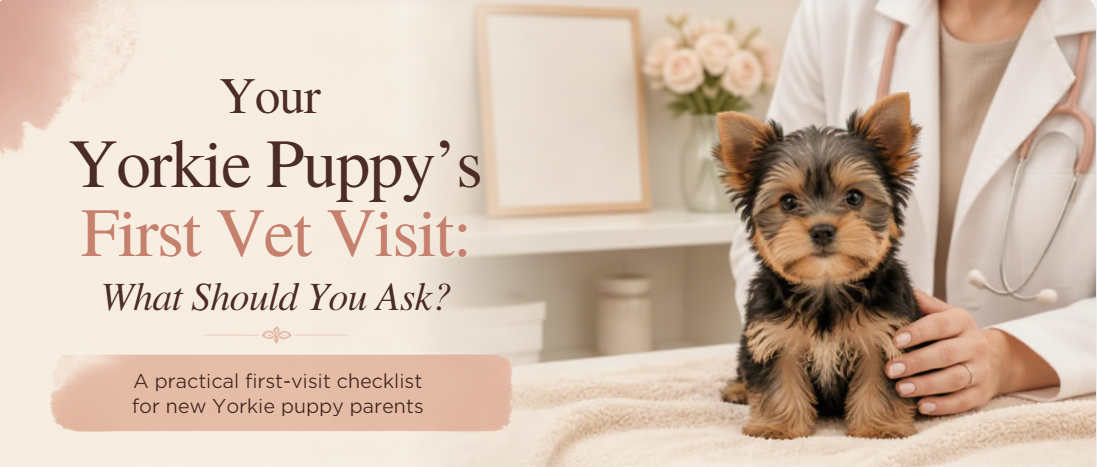
Your Yorkie Puppy’s First Vet Visit: What Should You Ask?
A simple first-appointment checklist for new Yorkie puppy parents
|
FIRST VISIT GOAL: Leave knowing your puppy’s individual vaccine plan, parasite-prevention plan, feeding needs, dental milestones, and exactly who to call after hours. |
Your puppy’s first veterinary visit is the perfect time to establish a relationship with the medical team that will follow your Yorkie as they grow. Bring any breeder or prior veterinary records, a list of the food and supplements your puppy is receiving, and your questions.
7 Important Questions to Ask
1. What vaccination schedule do you recommend for my puppy?
Ask which vaccines are due now and when the next doses should be given.
Ask when your veterinarian considers public sidewalks, parks, pet stores, puppy classes, grooming, or other shared dog areas appropriate for your puppy.
Vaccination timing and local disease risk vary, so follow your veterinarian’s plan rather than a one-size-fits-all calendar.
2. What parasite prevention does my Yorkie need?
Ask about prevention for intestinal parasites, fleas, ticks, and heartworm based on your puppy’s age, weight, lifestyle, and local risk.
Ask whether your veterinarian wants a fecal sample or additional parasite testing.
3. When should my puppy be microchipped?
Ask when microchipping is appropriate and how registration works.
Make sure the chip is registered with your current phone number, email, and address—and update it if you move.
4. When should we discuss spay or neuter timing?
Ask your veterinarian to explain the benefits, risks, and timing considerations for your individual Yorkie.
Timing can depend on age, size, health, development, and your veterinarian’s clinical judgment.
5. Is my puppy’s dental development on track?
Ask the veterinarian to check bite alignment, erupting adult teeth, gum health, and whether any baby teeth appear likely to be retained.
Small breeds can be prone to retained baby teeth and early dental disease, so puppyhood is a good time to begin home tooth-brushing practice.
6. Am I feeding the right food and amount?
Review the exact food, meal frequency, treats, supplements, and appetite pattern.
For a very small Yorkie puppy, ask what changes in appetite, energy, or behavior should trigger a same-day veterinary call.
7. Where should I go in an emergency?
Ask which hospital handles after-hours emergencies and whether your regular clinic has an on-call service.
Save the emergency hospital’s phone number, address, and driving route in your phone before you need it.
Bring This to the Appointment
Bring |
Ask Before You Leave |
|
Vaccination / deworming records |
Next vaccine appointment |
|
Current food + feeding schedule |
Parasite-prevention schedule |
|
Medication / supplement list |
Microchip plan |
|
Any recent symptoms or questions |
Dental follow-up, if needed |
|
Stool sample, if clinic requests it |
Emergency clinic contact information |
Call the Veterinarian Promptly If Your Puppy Becomes Ill
|
Examples include repeated vomiting or diarrhea, marked weakness, collapse, trouble breathing, seizures, severe pain, inability to keep food or water down, or a very young puppy that suddenly refuses food and seems weak or unusually sleepy. |
Before You Head Home
Ask the veterinary team to write down the next vaccine date, parasite-prevention plan, feeding instructions, and after-hours emergency contact. That one page of notes can become the beginning of your puppy’s lifelong health record.
Educational note: This article provides general puppy-care information and is not a substitute for individualized veterinary advice. Your veterinarian should tailor vaccination, parasite prevention, nutrition, and procedure timing to your puppy’s health and local disease risks.
