


0 Yorkie Puppy Poop: What's Normal and When Should You Worry?
- Valness Yorkies Blog
- by Kathy Pittman
- 09/27/2026
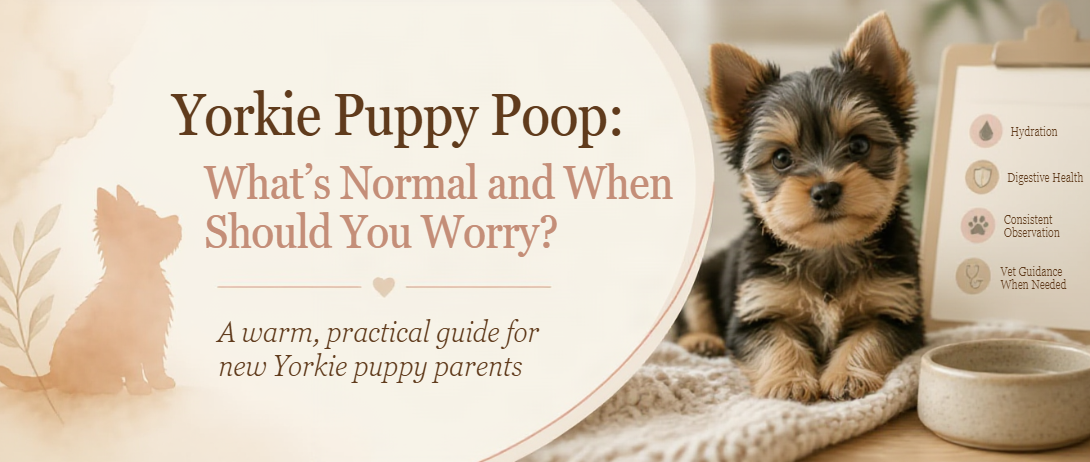
Yorkie Puppy Poop: What's Normal and When Should You Worry?
A practical guide to stool changes, diarrhea, parasites, dehydration, and when to call your veterinarian.
|
QUICK ANSWER A healthy puppy stool is usually formed, moist, and easy to pick up. One soft stool can happen after travel, excitement, or a routine change. Repeated watery diarrhea, blood, vomiting, weakness, refusal to eat, or marked sleepiness deserves prompt veterinary attention - especially in a very young or tiny Yorkie. |
What's Normal After Coming Home?
The first few days in a new home can temporarily change stool. Travel, excitement, a different schedule, new treats, and stress may make a bowel movement softer or more frequent.
A puppy who is bright, eating, drinking, playful, and quickly returns to formed stools is generally less concerning than a puppy whose diarrhea continues or is paired with other symptoms.
A Simple Stool Guide
Usually Less Concerning |
Call Your Veterinarian / Watch Closely |
|
Brown, formed, moist, easy to pick up |
Repeated watery diarrhea or rapidly increasing frequency |
|
One mildly soft stool after travel or excitement |
Bright red blood, black/tarry stool, or large amounts of mucus |
|
Temporary change during a carefully managed food transition |
Diarrhea with vomiting, weakness, pain, or refusal to eat |
|
Minor variation in shade after different foods/treats |
Very pale/gray stool, persistent unusual color, or visible worms |
Diet Changes: Go Slowly
A sudden food change can upset a puppy stomach. Keep your new Yorkie on the food and feeding routine they were already eating at first, unless your veterinarian recommends otherwise.
If a food change is needed, ask your veterinarian how gradually to transition. Avoid adding several new treats, toppers, chews, or table foods at once - it becomes difficult to identify what caused the problem.
|
VALNESS PUPPY PARENT TIP For a tiny Yorkie puppy, do not intentionally fast or withhold meals for diarrhea unless your veterinarian specifically tells you to. Small puppies have limited energy reserves and may become weak quickly if they are not eating. |
Parasites Are Common in Puppies
Roundworms, hookworms, Giardia, coccidia, and other intestinal parasites can cause soft stool or diarrhea. Some infected puppies still look energetic, so appearance alone cannot rule parasites out.
Follow the deworming and fecal-testing plan recommended by your veterinarian.
If diarrhea develops, your clinic may ask for a fresh stool sample. Ask how they want it collected and stored.
Do not use leftover dewormers or over-the-counter medications without veterinary guidance; treatment depends on the cause and the puppy's weight.
Diarrhea and Dehydration: Why Tiny Yorkies Need Extra Attention
Young toy-breed puppies can lose fluid quickly. Repeated diarrhea - especially with vomiting or poor appetite - can become more serious sooner than many owners expect.
Possible Dehydration / Illness Signs• Tacky or dry-feeling gums • Unusual weakness or marked sleepiness • Reduced interest in water or food • Reduced urination • Eyes that appear sunken • Collapse or difficulty standing |
What To Do• Offer access to fresh water unless your veterinarian says otherwise • Keep the puppy warm, quiet, and supervised • Call your veterinarian promptly for repeated diarrhea • Seek urgent care if weakness, collapse, repeated vomiting, or rapid worsening occurs |
Red Flags: Call the Veterinarian Promptly
Repeated watery diarrhea, very frequent stool, or diarrhea that is not improving
Blood in the stool, black/tarry stool, or a large amount of mucus
Vomiting along with diarrhea
Weakness, trembling, collapse, unusual sleepiness, or difficulty standing
Refusing food - especially in a very young or very small puppy
Painful or swollen abdomen, repeated straining, or crying during bowel movements
Suspected ingestion of medication, toxin, string, bone, toy piece, or another foreign object
Signs of dehydration or rapid worsening
|
IMPORTANT Do not give human anti-diarrhea medicine, antibiotics, or home remedies unless your veterinarian specifically recommends them for your puppy. Some products can be unsafe, and suppressing symptoms may delay diagnosis of parasites, infection, dietary problems, or a swallowed object. |
What to Tell Your Veterinarian
When the stool change started and how many episodes occurred
Stool color and consistency; a photo can be helpful
Whether there is blood, mucus, worms, or foreign material
Any vomiting, appetite change, weakness, or behavior change
Recent food, treat, chew, medication, or supplement changes
Possible exposure to other dogs, shared potty areas, standing water, toxins, or swallowed objects
The Bottom Line
Puppy poop will not look identical every day. A brief soft-stool episode can happen during the transition to a new home. What matters most is the whole puppy: appetite, energy, hydration, frequency of diarrhea, and whether symptoms are improving or getting worse. With a tiny Yorkie puppy, it is reasonable to call your veterinarian sooner rather than later when you are concerned.
Educational note: This article provides general puppy-care information and is not a substitute for veterinary diagnosis or treatment. Contact your veterinarian for persistent diarrhea, blood in the stool, vomiting, weakness, dehydration, appetite loss, or other concerning symptoms.
